
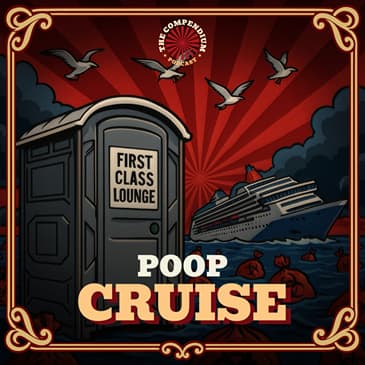
A fuel leak, an engine-room fire and one catastrophic power failure turned Carnival Triumph into the infamous “Poop Cruise”. More than 4,200 passengers and crew were left without normal plumbing, air conditioning or hot food as the disabled ship crawled towards Alabama.
A four-day cruise from Texas to Mexico sounds almost aggressively relaxing: buffets, cocktails, entertainment and a quick stop in Cozumel before heading home. But in February 2013, the Carnival Triumph became a case study in how quickly a floating resort can unravel when the machinery hidden below deck stops working.
We’re going aboard the voyage that the internet christened the Poop Cruise. There is plenty of absurdity here, from red biohazard bags to a deck full of improvised tents, but the joke sits on top of a serious systems failure. Thousands of people were trapped on a ship without propulsion, reliable sanitation, refrigeration or climate control, and every attempted solution seemed to reveal another problem.
What Happened on the Carnival Triumph Poop Cruise?
Carnival Triumph left Galveston, Texas, on 7 February 2013 carrying 3,143 passengers and 1,086 crew members. After a stop in Cozumel, the ship began its return journey across the Gulf of Mexico. Most passengers went to bed expecting another day of food, music and sunshine before arriving home.
At about 5.30 on the morning of 10 February, an alarm sounded in the aft engine room. A flexible fuel-oil return line connected to one of the diesel generators had failed. Fuel sprayed onto a hot surface and ignited, creating a fire in a space packed with essential machinery and electrical cables.
The crew isolated the fuel supply and released the ship’s fixed carbon-dioxide firefighting system. The fire was extinguished and, crucially, nobody died in the initial emergency. But heat and smoke damaged cabling that carried power from the generators. The engines themselves were not the only issue: the electrical distribution needed to run propulsion and the hotel systems had been crippled.
Triumph was now drifting without normal propulsion. Emergency power kept some lighting and safety systems alive, but air conditioning, refrigeration, lifts and most electrical sockets stopped working. Phone batteries ran down and passengers queued around the few outlets they could find. Interior cabins became dark, hot boxes, while people moved mattresses onto open decks to get air.
Then the toilets failed. A modern cruise ship uses powered vacuum and waste systems, so flushing thousands of toilets is not simply a matter of gravity. Passengers were told not to use their cabin toilets and were given small red bags for solid waste. Liquid waste was directed towards showers and sinks, while limited working toilets attracted long queues.
The reality varied by location. Some passengers later said the most sensational media reports exaggerated what they personally saw; others described overflowing toilets, wet carpets and foul liquid moving through corridors as the unpowered ship rolled. That difference makes sense on a vessel with more than a dozen decks. A passenger in a ventilated upper cabin could experience a grim camping trip while somebody low in the ship endured heat, darkness and an unbearable smell.
Food became another logistical crisis. Refrigeration and most cooking equipment were unavailable, perishables spoiled and thousands of people needed feeding. Early meals gave way to cold sandwiches, snacks and rationing. Other Carnival ships brought supplies, but transferring everybody to them in open water would have been far more dangerous than it sounds. The sea was moving, the ships had limited spare capacity and one bad step between vessels could be fatal.
Passengers and crew built a strange temporary society on the upper decks. Mattresses, sheets and blankets became a sprawling tent city. The open air offered relief from the cabins during the day, but nights were cold and rain drove people back inside. Accounts describe long food queues, frayed tempers and moments of generosity, while the crew continued cleaning, distributing supplies and trying to maintain order despite living through the same failure.
The original plan was to tow Triumph to Progreso, Mexico. As the ship drifted and the recovery calculation changed, Mobile, Alabama, became the destination. Tugboats attached lines and began the slow haul north. News helicopters and round-the-clock television coverage transformed the disabled vessel into a global spectacle long before anyone stepped ashore.
Carnival restored some services as portable equipment and supplies arrived, but progress was uneven. A generator brought back limited power and more toilets. The tow itself suffered delays, including a broken line near Mobile. Finally, on the evening of 14 February, Carnival Triumph reached the dock. Passengers cheered as the voyage ended, though disembarking more than 3,000 guests with limited lifts took hours.
Carnival offered passengers a refund, transport home, credit for another cruise and $500. The company also let them keep their bathrobes, a detail so strangely inadequate that it became part of the legend. Lawsuits followed, but the terms printed on cruise tickets limited what many passengers could recover.
The official joint investigation by the Bahamas and United States traced the fire to fuel spraying from that damaged return line onto a hot engine surface. It also examined why the casualty caused such a broad loss of electrical power and made recommendations covering fuel-line protection, cable separation, emergency generators, firefighting and safety management. The disaster was not merely a toilet story; it exposed how one machinery-space fire could disable systems serving an entire floating city.
After months of repairs, Carnival Triumph returned to service in June 2013. Carnival later spent hundreds of millions of dollars transforming the ship, and in 2019 it re-entered service under the name Carnival Sunrise. The vessel moved on, but the nickname proved much harder to renovate away.
Why This Story Matters
The Poop Cruise is funny because the details are so grotesquely specific, yet sanitation is fundamental infrastructure. Once toilets, refrigeration, ventilation and lifts disappear, a luxury ship becomes a crowded steel shell. Comfort is not separate from engineering; it is the visible result of dozens of hidden systems working together.
It also shows why redundancy has to be genuinely independent. A ship may have multiple generators, but that protection is weakened if one fire can damage the cables needed to distribute their power. The official investigation looked beyond the failed pipe to the layout, maintenance, alarms and emergency arrangements that allowed a local failure to spread through the vessel’s operations.
We also have to separate the passengers’ ordeal from the media caricature. Conditions were appalling for many people, but experiences differed across the ship and no passengers died. Crew members were repeatedly praised even though their accommodation was often deeper inside the vessel and they still had to manage waste, queues, medical needs and frightened guests.
Netflix’s 2025 documentary Trainwreck: Poop Cruise brought the voyage back into popular culture through first-hand recollections and footage from onboard. It is easy to watch the story as gross-out entertainment. Underneath, however, is a warning about maintenance, corporate preparedness and the difficulty of rescuing thousands of people at sea.
Topics Include
The Carnival Triumph engine-room fire and fuel-line failure
Why the ship lost propulsion, air conditioning and plumbing
Red biohazard bags, overflowing toilets and the upper-deck tent city
The tugboat operation that brought the ship to Mobile, Alabama
The official investigation, compensation and Carnival Sunrise renaming
Resources and Further Reading
“Trainwreck: Poop Cruise” (2025) – Netflix
Carnival Sunrise (formerly Triumph) - Wikipedia