
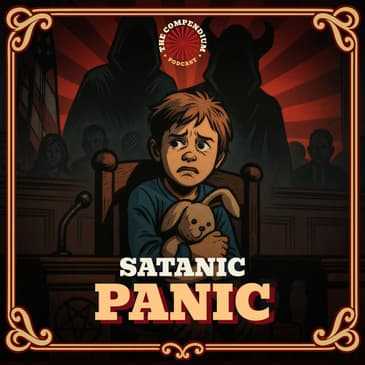
The Satanic Panic turned fears about child abuse, new religions and changing families into allegations of organised ritual crime. The McMartin Preschool case showed how suggestive interviews could make impossible stories feel official.
During the 1980s, Americans were warned that secret Satanic networks were abusing children in day-care centres, infiltrating communities and hiding evidence beneath ordinary suburbs. Police, therapists, parents, churches and television programmes treated extraordinary allegations as signs of a coordinated threat. Investigations expanded even when physical corroboration did not.
The Satanic Panic was not a single hoax engineered by one person. It was a moral panic built from genuine concern about protecting children, new awareness of abuse, disputed therapeutic ideas, religious activism and media competition. We are following the McMartin Preschool case because it shows how those forces could transform questions into testimony and suspicion into years of prosecution.
What Happened During the Satanic Panic?
The panic drew on older fears about occult crime but gained new energy from books, talk shows and claims recovered in therapy. Michelle Remembers, published in 1980 by patient Michelle Smith and psychiatrist Lawrence Pazder, described alleged ritual abuse presented as recovered memory. Critics later challenged its methods and factual foundations, but the book helped popularise a vocabulary of hidden cults.
At the same time, more mothers entered paid work and day care became both necessary and culturally contested. Recognition that child sexual abuse was real and often ignored created an urgent demand to believe children. That correction was vital, yet investigators had not fully developed reliable methods for interviewing very young witnesses without suggestion.
The McMartin Preschool case began in 1983 in Manhattan Beach, California, after a mother accused teacher Ray Buckey of abusing her son. Police sent a letter to hundreds of parents asking them to question their children and listing possible acts. The wording spread alarm before investigators had established whether the initial allegation was reliable.
Children were interviewed at Children's Institute International. Recordings later showed techniques now widely criticised: repeating questions after denials, praising answers that matched suspicions, introducing information from other children and suggesting that frightening or impossible events might have occurred. Over time, accounts expanded to tunnels, animals, ceremonies and famous participants.
The children's statements cannot be reduced to simple lying. Young children try to cooperate with adults and learn which answers receive approval. Memory is reconstructive, and repeated questioning can make imagined or suggested material feel familiar. Interview practice matters because confidence may increase even when accuracy decreases.
Investigators searched the preschool and surrounding property. Claims about secret tunnels became central, but excavations did not produce corroborating evidence of the vast underground spaces described in some accounts. Physical examinations and other inquiries likewise failed to establish the organised ritual network alleged by prosecutors and campaigners.
Seven people associated with the school were charged. The proceedings became exceptionally long and expensive. Charges against several defendants were dropped, while Ray Buckey and his mother Peggy McMartin Buckey went to trial. In 1990 jurors acquitted them on most counts and deadlocked on others; a second trial also failed to convict Ray.
McMartin was not isolated. Day-care workers and families elsewhere faced allegations involving Satanic ceremonies, secret passages and impossible travel. Some defendants were convicted and imprisoned before cases collapsed or verdicts were overturned. The pattern crossed borders and merged with fears about heavy metal, role-playing games and new religious movements.
News coverage amplified the threat through repetition. Programmes could present an allegation, an expert warning and a distraught parent long before a jury heard tested evidence. The absence of proof was sometimes reframed as proof of how sophisticated the cult must be, making the theory difficult to disconfirm.
Calling the period a moral panic does not mean abuse never occurred in day care or that every allegation was false. It means the social response became disproportionate, relied on a shared mythology and harmed innocent people while often failing to improve evidence-based protection for children.
The legacy influenced forensic interviewing, with greater emphasis on open questions, avoiding rewards for particular answers and recording sessions. Yet similar dynamics survive whenever institutions decide that doubt equals complicity and treat the scale of an accusation as a substitute for corroboration.
Why This Story Matters
We also have to recognise why the claims were persuasive at the time. Adults were learning that abuse could remain hidden and that respected institutions could protect offenders. The mistake was not concern; it was allowing a theory of vast ritual networks to bypass careful evidence.
The Satanic Panic matters because two duties can collide: listening seriously to children and protecting the integrity of their memories. The lesson is not to dismiss disclosures. It is to ask questions that allow an account to emerge without teaching the witness what adults expect to hear.
Moral panics succeed by attaching themselves to a real vulnerability. Child abuse was and is real, and institutions had often ignored survivors. That truth gave urgency to claims that were radically different in scale and form. A false theory can therefore grow inside a justified concern rather than in opposition to it.
The McMartin case also shows how systems reinforce one another. Therapists validated police assumptions, news reports intensified parental fear, political pressure rewarded prosecution and new allegations seemed to confirm earlier publicity. No participant needed to invent the entire story for the cycle to escalate.
Language such as 'believe the children' was morally powerful but legally incomplete. Belief can mean taking a disclosure seriously enough to investigate with care; it cannot mean deciding the conclusion before evidence is tested. Justice requires concern and scepticism to operate together.
Listen for Michelle Remembers, the police letter, the interview tapes, tunnel searches and the years of trials. The story remains relevant whenever fear turns uncertainty into certainty and anyone requesting evidence is accused of defending the very harm they are trying to investigate.
Topics Include
Michelle Remembers and the language of ritual abuse
Day-care anxiety and changing awareness of child abuse
The first McMartin Preschool allegation
Suggestive interviewing and children's memory
The tunnel claims, trials and absence of convictions
How media and institutions turned fear into a national moral panic
Resources and Further Reading
"Satan's Silence: Ritual Abuse and the Making of a Modern American Witch Hunt" by Debbie Nathan and Michael Snedeker.
"We Believe the Children: A Moral Panic in the 1980s" by Richard Beck.
"McMartin preschool trial" - Wikipedia page
"The Witch-Hunt Narrative: Politics, Psychology, and the Sexual Abuse of Children" by Ross E. Cheit.
"Michelle Remembers" by Michelle Smith & Lawrence Pazder MD