
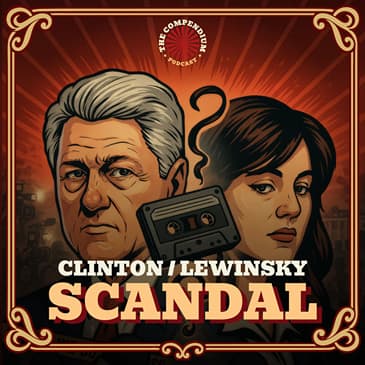
The Monica Lewinsky scandal began with a private relationship and became an impeachment crisis involving secret recordings, a sexual-harassment lawsuit, an independent counsel and a media machine learning how quickly the internet could turn a young woman into a global punchline.
For years, the Clinton–Lewinsky story was flattened into a few unforgettable phrases and the details of a blue dress. That version centres sex and embarrassment while pushing power, politics and public humiliation to the edges. Monica Lewinsky was 22 when her relationship with President Bill Clinton began. He was 49, married and the most powerful elected official in the world.
We place their relationship back inside the political battles of the 1990s: Whitewater, Paula Jones’s lawsuit, Kenneth Starr’s expanding investigation and a Republican movement determined to expose Clinton’s conduct. None of that excuses Clinton’s deception. It does explain how a personal secret became evidence in a constitutional confrontation and why Lewinsky carried a punishment far beyond anything imposed on the president.
What Happened in the Monica Lewinsky Scandal?
Bill Clinton entered the White House in 1993 after surviving allegations about earlier relationships during the presidential campaign. His opponents continued investigating him and Hillary Clinton over Whitewater, a failed Arkansas property investment. The inquiry produced convictions of some associates but did not establish criminal wrongdoing by the Clintons themselves.
Another controversy began with an article describing Arkansas state troopers who allegedly arranged encounters for Clinton while he was governor. Paula Jones said one account referred to her but falsely presented the encounter as consensual. She alleged that Clinton had exposed himself and propositioned her in a hotel room in 1991. Clinton denied the allegation, and Jones filed a sexual-harassment lawsuit.
Monica Lewinsky arrived at the White House as an unpaid intern in 1995. During a government shutdown, interns took on extra work, increasing her access to senior staff. She and Clinton began a sexual relationship that continued intermittently. Lewinsky later described genuine emotional attachment; Clinton characterised the relationship as improper and accepted responsibility while disputing legal claims that he had lied under oath.
Lewinsky was eventually moved to the Pentagon, where she became friends with civil servant Linda Tripp. Monica confided details of the relationship, and Tripp began secretly recording their telephone conversations. Tripp said she wanted protection and evidence. Critics saw an intimate betrayal shaped by political contacts who recognised that the recordings could damage the president.
The Paula Jones legal team was searching for evidence of a pattern of relationships with government employees. Lewinsky’s name appeared on a witness list, placing her secret directly inside a civil case. She signed an affidavit denying a sexual relationship with Clinton. Questions about gifts, employment assistance and what witnesses had been encouraged to say later became central to allegations of obstruction and perjury.
Tripp took the tapes to independent counsel Kenneth Starr, whose original Whitewater mandate had already expanded into other matters. With approval from the Justice Department, Starr’s office investigated whether Clinton and Lewinsky had lied or obstructed justice in the Jones case. Agents confronted Lewinsky at the Ritz-Carlton in January 1998 and pressed her to cooperate. She ultimately received immunity and testified.
The story reached the public through a new media ecosystem. Newsweek held its report while editors sought further confirmation, but Matt Drudge published news that the magazine was sitting on an explosive allegation. The internet allowed rumour to leap around traditional gatekeepers, and the mainstream press rapidly followed. Lewinsky became one of the first people to experience worldwide public shaming at online speed.
Clinton denied having “sexual relations” with Lewinsky, first in the Jones deposition and then before the nation. The wording relied on a disputed legal definition and became impossible to sustain once physical evidence and testimony established the relationship. In August 1998, Clinton acknowledged an inappropriate relationship while maintaining that his earlier answers had been legally accurate.
Starr sent Congress a report identifying possible grounds for impeachment, including perjury and obstruction of justice. Its explicit detail was published for an enormous audience. The material was legally relevant to Starr’s argument, but its release also transformed Lewinsky’s private life into public property. Television, newspapers and comedians treated her body, sexuality and character as entertainment.
Hillary Clinton described the campaign against her husband as a “vast right-wing conspiracy”. There was a coordinated conservative network funding litigation, sharing information and pursuing damaging material about the president. There was also real misconduct by Bill Clinton. Both can be true: political actors exploited the scandal, and Clinton handed them the evidence by beginning the relationship and then denying it.
In December 1998, the House of Representatives impeached Clinton for perjury before a grand jury and obstruction of justice. The Senate trial ended in February 1999 with acquittal on both charges, well short of the two-thirds majority required for removal. Clinton completed his second term with strong approval ratings, while Lewinsky struggled for years to build an ordinary life outside the identity imposed on her.
Public understanding has changed. Later conversations about consent, workplace power and misogyny have made it harder to treat the relationship as simply two equal adults behaving badly. Lewinsky has become a writer, producer and campaigner against bullying and public shaming. Her work does not erase her choices; it restores a humanity that the culture of 1998 largely refused her.
Why This Story Matters
The Monica Lewinsky scandal matters because it sits at the junction of legitimate accountability and political spectacle. A president lying under oath is serious. So are allegations of sexual harassment and abuses of power. Yet the investigation and media coverage often treated the women involved as tools: useful when their stories could wound Clinton, disposable when their dignity complicated the narrative.
It also predicted modern internet culture. A private individual became globally searchable before society had language for cyberbullying, slut-shaming or viral humiliation. Lewinsky’s name turned into shorthand for a sexual act while Clinton remained a political statesman. That imbalance tells us as much about the era as the impeachment votes do.
We revisit the scandal without casting Lewinsky as either temptress or flawless victim, and without pretending Clinton’s opponents invented his conduct. Listen to our full discussion for the tapes, the Ritz-Carlton confrontation, the legal definitions, the media frenzy and the political strategy behind a crisis that nearly removed a president.
Topics Include
Monica Lewinsky’s White House internship and relationship
Paula Jones’s lawsuit and the Whitewater investigation
Linda Tripp’s secret recordings
Kenneth Starr and the expanding independent-counsel inquiry
The Starr Report and Bill Clinton’s impeachment trial
Media misogyny, public shaming and Lewinsky’s later work
Resources and Further Reading
"Monica's Story" by Andrew Morton
"The Starr Report" by Kenneth Starr
"A Vast Conspiracy: The Sex Scandal That Nearly Brought Down a President" by Jeffrey Toobin
"The Clinton Affair" – Documentary series by A&E
“Impeachment” the American Crime Story