
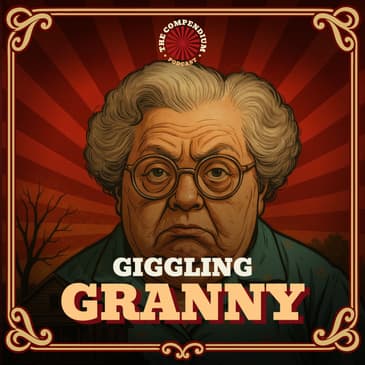
Nannie Doss looked like a cheerful grandmother and spoke about finding perfect romance. Behind that harmless image was a trail of poisoned relatives, four dead husbands and a confession that exposed how easily domestic murder could pass as illness.
The nickname “Giggling Granny” almost turns Nannie Doss into a cartoon. Photographs show a smiling, bespectacled woman, and newspaper accounts lingered on the laughter she displayed after her arrest. That image helped sell papers, but it also repeats the mistake that allowed her to move through several states while death followed her family.
We are looking beyond the nickname at what can be established about her victims, the years of missed warning signs and the investigation that finally stopped her. Doss confessed to eight killings, while other suspicious deaths were later attributed to her, producing the frequently cited total of eleven.
What Happened in the Nannie Doss Case?
Nannie was born Nancy Hazel near Blue Mountain, Alabama, in 1905. She grew up in a poor farming family under a controlling father and received little formal schooling. Later accounts describe a childhood head injury, blackouts and headaches, but none of those details explains or excuses the choices she made as an adult.
Romance magazines offered escape. Nannie absorbed stories in which happiness arrived through a perfect husband, and lonely-hearts advertisements later became her route to new relationships. The fantasy mattered because she repeatedly treated real people as disposable when they failed to match it.
She married Charles Braggs in 1921 and had four daughters. Two young children died suddenly in 1927 after becoming ill at breakfast. The deaths were treated as accidental, although suspicion later fell on Nannie. Braggs eventually left and survived, reportedly explaining years later that he had feared eating or drinking anything she prepared when she was angry.
Her second husband was Frank Harrelson, whom she met through a personal advertisement. Their marriage lasted for years but was marked by his drinking and violence. During this period, deaths struck the next generation. One newborn grandson died in hospital in circumstances his mother later described as suspicious. Another grandson, Robert, died while in Nannie’s care, after which she collected a small insurance payment.
In 1945 Harrelson died after drinking liquor laced with rat poison. Doss later admitted killing him and said he had assaulted her after returning home drunk. At the time, his history of alcoholism gave officials an easy explanation, and there was no forensic investigation capable of connecting the death to a wider pattern.
Nannie then met Arlie Lanning through another lonely-hearts column. He died in 1952 after a sudden illness that was attributed to heart failure, and the family home later burned. Lanning’s mother subsequently died while Nannie was caring for her. Neither event stopped Doss from leaving North Carolina and continuing her search for another husband.
Her sister Dovie also died after Nannie came to stay. In Kansas, Nannie married retired salesman Richard Morton, who died in 1953. Soon afterwards, Nannie’s mother Louisa moved in following a broken hip and died after several days of severe stomach pain. Again, the separate locations and apparently ordinary domestic circumstances prevented authorities from seeing one connected series.
Her fifth husband, Samuel Doss, was a strict and frugal Oklahoma man. Their relationship deteriorated, but he persuaded Nannie to return after taking out life-insurance policies. He became seriously ill after eating food she had prepared, recovered in hospital and returned home. That evening Nannie served him coffee, and he died on 5 October 1954.
This time the physician insisted on an autopsy. The examination found a lethal quantity of arsenic. Police arrested Nannie in Tulsa and began tracing her history across Alabama, Georgia, North Carolina, Kansas and Oklahoma. The cheerful manner that had made her seem harmless now became part of the press spectacle.
During questioning, Doss confessed to killing Samuel and eventually admitted the murders of three other husbands, her mother, her sister, a grandson and a mother-in-law. Accounts describe investigators using access to her romance magazines as an incentive during interviews. She denied responsibility for some of the other deaths linked to her.
Exhumations supported the investigation by revealing arsenic in several remains. Yet prosecutors did not attempt to try every suspected killing across multiple jurisdictions. Oklahoma had the clearest recent case: Samuel’s body, the autopsy evidence and Nannie’s confession.
In May 1955 she pleaded guilty to Samuel Doss’s murder and received a life sentence. Contemporary officials did not pursue execution, with her sex and questions about mental fitness influencing the decision. She spent the rest of her life at the Oklahoma State Penitentiary and died from leukaemia in 1965.
The exact victim count requires care. Doss confessed to eight murders, while writers commonly describe eleven victims by including other suspicious deaths. Some allegations rest on later testimony rather than a conviction or surviving forensic record. The responsible version of this story distinguishes confession, evidence and suspicion instead of presenting every claim as equally proven.
Why This Story Matters
The case matters because Doss exploited assumptions about gender, age and domestic care. Officials were prepared to see a grieving wife, mother or grandmother rather than a repeat killer. Poisoning produced symptoms that resembled illness, and the victims died in private spaces where she appeared to be nursing them.
Geography protected her too. She moved between states, changed surnames through marriage and acted before modern databases could connect coroners, police departments and insurance records. Each death was assessed locally, so the pattern remained invisible.
The story also shows why sensational nicknames can distort true crime. “Giggling Granny” invites us to marvel at the contrast between a sweet appearance and murder, but it shifts attention from the people who died and the institutions that failed to examine their deaths.
Money and romance were not competing explanations. Insurance payments were often modest, but they funded movement and independence. Her fantasy of the perfect mate gave her a self-serving story, while financial benefit repeatedly followed death. Motives can overlap without becoming less deliberate.
Most importantly, we should resist turning family murder into folklore. Doss was not terrifying because she failed to look like a stereotypical serial killer. She was terrifying because that stereotype helped her. Her case reminds us that evidence matters more than appearance, charm or the social role somebody performs.
Topics Include
Nannie Doss’s childhood and obsession with romantic fantasy
The suspicious deaths surrounding her first two marriages
Arlie Lanning, Richard Morton and deaths across several states
Samuel Doss’s arsenic poisoning and the decisive autopsy
Doss’s confessions, exhumations and 1955 life sentence
Why the “Giggling Granny” nickname obscures the victims
Resources and Further Reading
“Nannie Doss” - Wikipedia
“The Giggling Grandma” - Murderpedia