
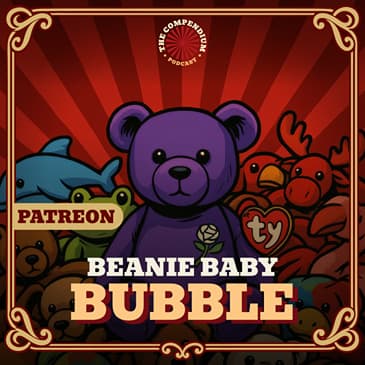
Beanie Babies began as inexpensive toys and became one of the strangest speculative frenzies of the 1990s. Scarcity, retirements and the early internet convinced ordinary buyers that plush animals could be investments.
A five-dollar plush toy should not have been able to produce queues, thefts, divorces and breathless price guides. Yet Beanie Babies did exactly that. Ty Warner’s deliberately under-stuffed animals arrived at the perfect moment: collectors were learning to trade online, retailers were hungry for repeat visits and scarcity could be manufactured one retirement announcement at a time.
To understand Beanie Baby bubble, we need to separate the image that survived in popular culture from the chronology preserved in records, testimony and later research. That approach keeps the story compelling without allowing a dramatic claim to outrun the evidence.
What Happened in the Beanie Baby bubble Story?
Ty Warner launched Beanie Babies in 1993 after building experience in the plush-toy business. Their small size, low price and flexible bodies made them distinctive, but the crucial commercial decision was distribution: Ty favoured independent shops, limited allocations and frequently withdrew characters from sale. That detail is central to understanding Beanie Baby bubble because it connects the public story to the practical choices that shaped what followed.
Retirements turned ordinary toys into apparently finite assets. Collectors watched tags, colour variations and production generations, while price guides projected extraordinary future values. The possibility that a rare bear might fund a child’s education made buying multiples feel prudent rather than excessive. Contemporary accounts and later reconstructions do not agree on every minor detail, so the safest reading keeps the documented sequence separate from later embellishment.
The emerging web accelerated the craze. Early collector sites circulated rumours and values, while eBay gave owners a visible secondary market. Asking prices were often mistaken for completed sales, creating the impression that almost every attic contained a fortune. Seen in sequence, the event was not an isolated twist but part of a chain in which earlier decisions narrowed the options available later.
McDonald’s 1997 Teenie Beanie promotion pushed the brand into mass culture. Restaurants sold out, adults bought meals for the toys and news coverage amplified the sense of shortage. Ty Inc. was now selling both products and the expectation that the next release might be valuable. It is also where popular retellings tend to compress the timeline, turning a complicated development into a single dramatic moment.
The market weakened when supply, variants and speculative buyers overwhelmed genuine demand. Ty’s 1999 retirement announcement briefly revived panic, but the subsequent decision to continue production damaged the promise of scarcity. Most collections were never worth anything close to their guidebook valuations. The distinction matters for search readers because it answers not only what happened, but why the episode unfolded in that particular way.
The aftermath did not make every Beanie worthless, and genuinely scarce examples can still command interest. The lesson is narrower and more useful: collectible value depends on verifiable rarity, condition and willing buyers, not on a printed price guide or a viral asking price. Later fame has sometimes overshadowed this stage, even though it provides the strongest evidence for how the story actually developed.
Why This Story Matters
The Beanie Baby boom is an unusually clear demonstration of a speculative bubble. Social proof, fear of missing out and stories of exceptional profits encouraged people to treat consumption as investment. It gives the story significance beyond its most famous image and makes clear why people continue to search for it.
It also foreshadowed internet-era markets. Online communities could spread expertise, but they could also recycle rumours and confuse advertised prices with realised value. The same pattern now appears around trainers, trading cards, meme stocks and digital collectibles. That wider context is essential if the episode page is to inform readers rather than simply repeat a familiar headline.
Ty Warner’s success shows the power of controlled distribution and narrative. The company did not need to promise financial returns; collectors supplied that story themselves, and the belief became more valuable than the beans and fabric inside each toy. For audiences today, the lasting value lies in recognising the mechanism, not only remembering the outcome.
The timeline also protects against hindsight. Once we know the outcome of Beanie Baby bubble, earlier warnings can look obvious and every participant can appear to be moving towards a fixed ending. In reality, people around Ty Warner acted with partial information, competing loyalties and assumptions that made sense to them at the time. Reconstructing that uncertainty is more accurate than treating the conclusion as inevitable.
Another reason the story continues to attract attention is the gap between the evidence and the version most easily repeated. Terms such as Beanie Babies value or Ty Warner history can lead readers towards a dramatic answer before they have encountered the underlying record. A careful account does not drain the story of suspense; it shows exactly where certainty ends and interpretation begins.
The people and institutions connected to Beanie Baby bubble did not stop existing when the most famous event ended. Investigations, court decisions, scientific reviews, public memory and commercial retellings continued to reshape what later audiences believed. That afterlife is part of the history, particularly when discussion centres on why the secondary market collapsed and what collectors can learn from the bubble rather than on the original chronology.
The strongest conclusion is therefore a measured one. We can state what documents, physical evidence and reliable testimony establish; we can identify the leading explanation where one exists; and we can label unresolved points honestly. That method makes Beanie Baby bubble more useful as history because it respects both the reader’s curiosity and the lives changed by the events.
For us, the enduring question is not simply what makes Beanie Baby bubble fascinating. It is what the evidence asks us to notice about institutions, incentives, memory and human behaviour. The strongest version of this story preserves uncertainty where it exists and gives documented experience more weight than a perfect ending.
Topics Include
Ty Warner and the launch of Beanie Babies
Retirements and manufactured scarcity
How eBay accelerated the collecting frenzy
McDonald’s Teenie Beanies and peak mania
Why the secondary market collapsed
What collectors can learn from the bubble
Resources and Further Reading
History: How the Beanie Baby Craze Came to a Crashing End
Zac Bissonnette, The Great Beanie Baby Bubble
Ty Collector historical timeline