
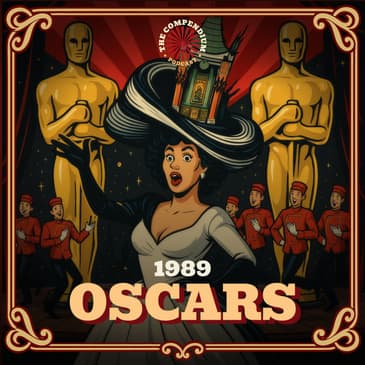
Snow White enters the Shrine Auditorium, follows a parade of giant stars with human legs and eventually meets her blind date: Rob Lowe. What follows is an eleven-minute musical spectacle involving coconuts, dancing tables and a rewritten version of “Proud Mary”. The 1989 Oscars opening number became one of the most ridiculed moments in Academy Awards history, but the ceremony that embarrassed Hollywood also introduced ideas the Oscars still use today.
On 29 March 1989, the 61st Academy Awards attempted to solve a familiar problem. The Oscars were prestigious, but they could also be long, formal and painfully predictable. Producer Allan Carr had built his career around flamboyant entertainment, publicity and spectacle. He promised a ceremony that would feel young, glamorous and alive. Instead, his hostless broadcast opened with a production number so strange that Disney sued, major Hollywood figures signed a letter of protest and a young performer found herself carrying the blame for decisions made far above her.
We revisit the 1989 Oscars through Rob Lowe’s infamous duet with Snow White, the bewildered celebrity reaction shots and the devastating fallout for Carr and actress Eileen Bowman. Yet calling it simply the worst Oscars ceremony ever misses what makes the story fascinating. Carr’s excesses included several genuine innovations, from making the red carpet part of the television event to replacing “And the winner is” with “And the Oscar goes to”. The night was both a spectacular failure and an unlikely blueprint for the modern awards show.
What Happened at the 1989 Oscars?
The ceremony began at Los Angeles’ Shrine Auditorium without a traditional host. Instead, an announcer promised one of Hollywood’s greatest legends and introduced Snow White. Played by 22-year-old actress Eileen Bowman, the character arrived at the back of the auditorium in a high, breathy voice before following dancers dressed as enormous glittering stars. As she moved through the audience singing altered lyrics to “I Only Have Eyes for You”, cameras captured famous faces trying to understand what was happening.
Some stars played along; others visibly recoiled. Martin Landau offered Bowman a sympathetic interaction, while Michelle Pfeiffer appeared to pull away. Tom Hanks and Sigourney Weaver looked caught between embarrassment and disbelief. The sequence was designed as a playful trip through old Hollywood, but the audience had not been given the context that made its camp theatrical style intelligible. What Carr understood as a revue was landing as an awkward children’s show at the industry’s most important night.
Reaching the stage did not end the journey. The scenery opened into a recreation of the Coconut Grove nightclub, where Merv Griffin sang “I’ve Got a Lovely Bunch of Coconuts”. Dancers emerged beneath giant cocktail headdresses. Veteran performers were introduced in quick succession, creating what was meant to be an affectionate tribute to Hollywood’s past. To many viewers, however, it looked as though ageing stars were being hurried across the stage as props in somebody else’s joke.
Then came the image that secured the opening number’s place in popular culture. Griffin introduced Snow White to her “blind date”, Rob Lowe. The young actor walked onstage and joined her in a rewritten version of “Proud Mary”. Neither performer had designed the number, and Lowe was not known as a singer, yet the pair had to sell lyrics about Walt Disney, Hollywood stardom and keeping the cameras rolling. Around them, the production grew still more elaborate as dancers, cocktail hats, tables and chairs joined the routine.
The performance kept unveiling new sets after the audience assumed it must be finished. A recreation of Grauman’s Chinese Theatre appeared, complete with ushers and another chorus. The finale placed an enormous model of the theatre above Snow White before Lily Tomlin emerged and joked that she had agreed to appear if the Academy could find her an entrance. Her timing finally gave the room permission to laugh, and the formal awards could begin.
Although the opening is now commonly remembered as a single duet, its scale helps explain the reaction. This was not one bad joke or a brief technical failure. It was an expensive, meticulously rehearsed statement of intent that continued for roughly eleven minutes while the live audience realised the tone was disastrously wrong. The broadcast also went to an international audience, making Hollywood’s embarrassment feel unusually public.
The consequences arrived immediately. Disney objected that its Snow White character had been used without permission and filed a copyright lawsuit, describing the portrayal as unauthorised and unflattering. Seventeen prominent figures, including Julie Andrews, Paul Newman, Gregory Peck and Billy Wilder, signed an open letter calling the telecast an embarrassment to the Academy and the film industry. The Academy reviewed how the programme had been approved and moved quickly to distance itself from the production.
Bowman’s experience reveals the human cost behind the punchline. She had auditioned without initially knowing that the job was for the Oscars and was then placed into an intense rehearsal schedule. Backstage after the performance, she said people avoided looking at her. She and Lowe skipped the Governors Ball, and a lawyer reportedly arrived at her home the next morning with a confidentiality agreement. Public mockery focused on the visible performers even though they had little power over the concept.
For Allan Carr, the humiliation was especially cruel. He was not an inexperienced amateur who had accidentally wandered into the biggest show in entertainment. Carr had produced the film version of Grease, helped make La Cage aux Folles a Broadway success and understood how publicity could turn a premiere into an event. He was also responsible for notorious failures, including Can’t Stop the Music and Grease 2. His instincts tended towards the spectacular, with very little territory between triumph and catastrophe.
Carr drew inspiration from the San Francisco revue Beach Blanket Babylon, whose camp sensibility and extravagant hats made sense to audiences familiar with it. The Oscars audience largely was not. Advisers reportedly warned him that the concept would not translate, but he pressed forward. He watched from the wings believing the number was succeeding and only understood the scale of the rejection at the after-party. The failure badly damaged his professional reputation, although claims that he never worked again are an exaggeration.
The opening was not Carr’s only large musical idea that evening. Later, a “Stars of Tomorrow” number featured young performers including Christian Slater, Patrick Dempsey, Blair Underwood, Ricki Lake and Corey Feldman. It too has become a time capsule of ambitious staging and second-hand embarrassment. Yet the rest of the ceremony also contained respected performances, major awards for Rain Man and memorable appearances by stars including Lucille Ball and Bob Hope.
Most importantly, Carr changed the ceremony in ways that survived him. He expanded televised red-carpet coverage, treating the arrivals, clothes and interviews as entertainment rather than a corridor leading to the main event. He thought carefully about pairing presenters as couples, co-stars or companions. He redesigned backstage as a social space and encouraged a more energetic, less formal atmosphere. He also popularised the phrase “And the Oscar goes to”, avoiding language that implied every other nominee had simply lost.
Billy Crystal’s appearance offered another glimpse of the future. His comedy was so well received that he became one of the ceremony’s defining hosts, returning repeatedly throughout the 1990s and beyond. The Academy’s response to 1989 was therefore not to abandon entertainment, but to control it more carefully. The following telecasts retained spectacle while placing it inside a clearer structure with a host who could guide the room.
Why This Story Matters
The 1989 Oscars show how a creative failure can contain successful ideas. Carr correctly recognised that audiences wanted more than a formal procession of envelopes. He understood the value of fashion, celebrity pairings, backstage access and a sense of occasion. His mistake was not wanting the ceremony to change; it was imposing a very specific theatrical language without giving the audience a way into the joke. The result overwhelmed the awards it was meant to celebrate.
The story also asks who pays when a powerful production goes wrong. Carr’s reputation never fully recovered, but Bowman carried the immediate public humiliation despite being a young actress following direction. Lowe became shorthand for the disaster even though he had accepted the job as an obligation to the Academy. Celebrity reaction shots turned their discomfort into entertainment, while the workers who built and performed the number became part of a joke they did not control.
Looking back through clips can make the opening seem harmlessly camp, especially now that audiences are more familiar with exaggerated revue and drag traditions. That does not mean the contemporary criticism was invented. Disney’s legal objection was real, the industry letter was unusually severe and the number failed to communicate its own premise. Both things can be true: the performance can be fascinating and funny now while having been a professional disaster in the room.
Its afterlife is part of the appeal. The Academy tried to move past the broadcast, but internet video returned it to public view and gave viewers the chance to judge it for themselves. What was once an embarrassing piece of live television became searchable, shareable Hollywood history. Every new awards-show controversy now invites comparison with Rob Lowe and Snow White, proving that the number Carr wanted the world to remember has indeed become immortal, just not in the way he intended.
We remember the 61st Academy Awards because it captures the risk inside every attempt to modernise a tradition. Change can look ridiculous before it looks inevitable. The red carpet, presenter chemistry and inclusive language Carr championed endured, while his eleven-minute fever dream became a warning about excess. The worst Oscars ever may also have been one of the most influential.
Topics Include
The 61st Academy Awards at the Shrine Auditorium in 1989
Rob Lowe and Eileen Bowman’s infamous Snow White duet
Allan Carr, Beach Blanket Babylon and the opening-number concept
Disney’s lawsuit and Hollywood’s open letter to the Academy
The impact on Eileen Bowman, Rob Lowe and Allan Carr
The red carpet, presenter pairings and other innovations that survived
Resources and Further Reading
“Eileen Bowman interview”: Hollywood Reporter
“The Full 1989 Oscars Opening Number”: Youtube