
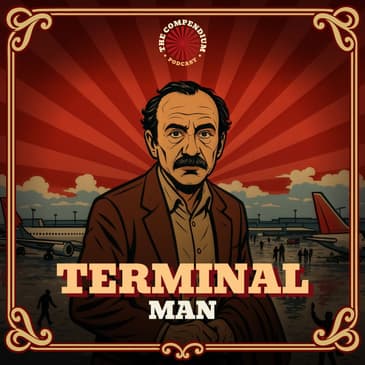
Mehran Karimi Nasseri arrived at Charles de Gaulle Airport without the documents that could carry him into another country. Known around Terminal 1 as “Sir Alfred”, he remained there for 18 years and became the unlikely inspiration for Steven Spielberg’s The Terminal.
Most of us find a delayed flight unbearable. Mehran Karimi Nasseri turned an airport departure lounge into a home. Between 1988 and 2006, the Iranian refugee slept on a red bench, ate in the terminal, filled trolleys with his possessions and watched millions of passengers continue journeys he could not make. Airport workers knew his routines, visitors arrived looking for him and letters could reach him with little more than “the man at Terminal 1” on the envelope.
His life sounds like a perfect Hollywood premise, and it eventually became connected to one. Yet the true story behind The Terminal is stranger, sadder and far less tidy than the film starring Tom Hanks. We follow the bureaucracy that brought Nasseri to Charles de Gaulle, the daily world he constructed there and the gradual transformation of Mehran into “Sir Alfred”. We also confront a central difficulty: his account changed over time, while relatives, lawyers and journalists offered sharply different versions of the past. The airport limbo was real; the story explaining it became increasingly hard to separate from the identity he built inside it.
What Happened to the Real Terminal Man?
Mehran Karimi Nasseri was born in Iran in the 1940s and later travelled to Britain to study. The exact path from Iran to a bench in France is contested. Nasseri said he had been expelled after protesting against the Shah and eventually received refugee status in Belgium. Some relatives disputed important parts of that story, including his claims about his family and the circumstances in which he left home. That uncertainty is not a footnote. It helps explain why every neat summary of the Terminal Man risks becoming another layer of legend.
What is clear is that Nasseri was recognised as a refugee in Belgium and later attempted to travel to Britain. At some point he no longer had the papers required to cross borders. He variously said they had been stolen or sent away, and the missing documentation left him trapped in a system built around proving identity. Britain would not admit him, other authorities struggled to place him and he eventually ended up at Paris Charles de Gaulle Airport.
In August 1988, Nasseri settled into Terminal 1. The popular image is that he could not legally step beyond an invisible line without immediate arrest. The legal reality was more complicated, but he genuinely lacked an easy route forward. France did not simply become his chosen destination, Belgium imposed conditions on recovering refugee documentation and Britain remained the place he hoped to reach. Each piece of paper seemed to depend on another piece of paper he did not possess.
He made a home between shops and restaurants. Two red upholstered benches became his bed, while a table served as his desk. He kept clothes and personal belongings on luggage trolleys, washed in airport facilities and developed a remarkably disciplined routine. He read newspapers and magazines, listened to a radio or Walkman and wrote extensively in notebooks. Staff brought meals, passengers gave him money and strangers sent letters, books and toiletries after his story began circulating.
Nasseri was educated and spoke English, which is one of many differences between him and Viktor Navorski, Tom Hanks’s character in The Terminal. The film places its fictional traveller at JFK Airport after a political crisis invalidates his passport. He learns English, finds work, forms friendships and pursues a clear mission. Nasseri’s existence at Charles de Gaulle was quieter and more psychologically complicated. There was no romantic comedy structure and no easy deadline after which the world would return to normal.
As the years passed, he became part of the airport itself. Employees watched his belongings when he went to wash, journalists requested interviews and travellers sought out the increasingly famous man surrounded by bags and press clippings. He preferred to be called Sir Alfred, a name associated with correspondence from British authorities. He began rejecting his Iranian identity and sometimes claimed to be Swedish or British. To outsiders, these assertions sounded irrational. To people who knew him, they suggested what prolonged isolation and repeated rejection had done to his sense of self.
A French human-rights lawyer, Christian Bourguet, spent years trying to resolve the case. Eventually, documentation became available that could have allowed Nasseri to leave and establish a legal life. The papers, however, named him as Mehran Karimi Nasseri and identified him as Iranian. He refused to sign them. The apparent solution did not recognise the person he now believed himself to be. His lawyer could navigate immigration law, but he could not force Alfred to become Mehran again.
That refusal changes the story. Nasseri was not simply a powerless victim held in a terminal for every day of those 18 years. Bureaucracy brought him into limbo, but identity, mental health, habit and fear helped keep him there after routes out appeared. The airport offered a strange form of safety. Inside Terminal 1 he was known, visible and even famous. Beyond it, he would have to create a life without the routines and community that had formed around him.
Fame brought books, documentaries and money. The mockumentary Here to Where explored his existence at the airport, while journalist Michael Paterniti’s GQ profile, The 15-Year Layover, captured the tension between fact and self-invention. DreamWorks acquired rights connected with his story before Steven Spielberg released The Terminal in 2004. Reports say Nasseri received a substantial payment, yet the arrival of Hollywood money did not make him leave. He deposited it and continued living beside the departures board.
In 2006, illness finally took him out of the airport for hospital treatment. His belongings were removed and the red-bench home disappeared. He later lived in accommodation in Paris, but the ending is not the clean liberation a film might promise. In 2022, Nasseri returned to Charles de Gaulle. Weeks later, he died from a heart attack in the airport that had defined him. Even that final return invites competing interpretations: tragedy, choice, institutionalisation, homelessness or a search for the only place where Sir Alfred fully existed.
Why This Story Matters
The Terminal Man story exposes how completely modern life depends on documentation. A passport is a small object, but without recognised papers a person can struggle to work, travel, rent a home or demonstrate where they belong. Nasseri’s ordeal made bureaucratic limbo visible because it unfolded in public, among travellers constantly proving their identities and crossing borders in minutes.
It also asks us to be cautious with stories labelled “inspired by true events”. Spielberg’s film borrowed the compelling image of a man living in an airport, then created a fictional country, motive and emotional journey around it. The result is warmer and more satisfying than the reality. Nasseri’s life contained no simple antagonist who could stamp the correct form and send him on his way. Legal obstacles overlapped with trauma, disputed memories and an identity that became inseparable from the terminal.
Most importantly, the case is about belonging. Was Alfred trapped because no country would accept him, or because the airport eventually became the only place he could accept himself? The answer changes depending on which year of his life we examine. We do not flatten him into a quirky travel anecdote or pretend every claim can be verified. Listen to the full episode for the shifting family story, the legal breakthroughs, the Hollywood transformation and the extraordinary routines that allowed one man to live for 18 years in plain sight.
Topics Include
Mehran Karimi Nasseri and his “Sir Alfred” identity
How missing refugee papers created an airport limbo
Daily life in Charles de Gaulle Airport Terminal 1
The disputed history behind Nasseri’s exile and family
The true story behind Steven Spielberg’s The Terminal
Why Nasseri refused the documents that could free him
Resources and Further Reading
The Terminal (2004) - Imbd
Here to Where (2002) - Youtube Full Mocumentry
The 15 Year Layover - by Michael Paterniti (GQ)
The Terminal Man - by Alfred Merhan