
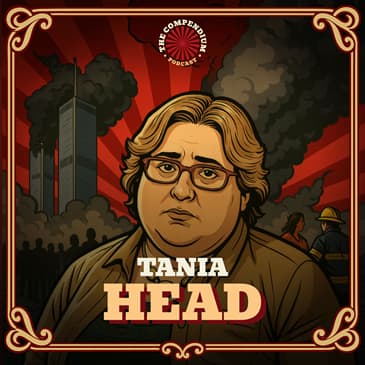
Tania Head became one of the most recognisable faces in the 9/11 survivor community. Her account of escaping the South Tower and losing her fiancé was devastating, detailed and entirely fabricated.
Some hoaxes are about money. Some are about access, attention or the intoxicating safety of being treated as a person who has suffered something unimaginable. Tania Head’s story sits in a far more uncomfortable category because it unfolded inside a community built to support people affected by the September 11 attacks. She gave comfort, raised the group’s profile and became indispensable to members, all while claiming a place that belonged to real survivors.
We explore the strange, sad and deeply troubling Tania Head 9/11 hoax with care. This is not a story about replaying graphic claims for drama. It is about how a false identity can become embedded in a grieving community, why people were reluctant to challenge it, and what happened when ordinary questions finally reached the parts of her story that could be checked.
What Happened with Tania Head?
In the years after 9/11, online survivor and family groups gave people a place to share information, grief and the practical work of rebuilding a life after catastrophe. In 2003, a woman calling herself Tania Head joined one of those communities. She said she had been in the South Tower on September 11 and had survived. As her involvement grew, so did the detail and emotional force of her account.
Her version of events made her seem to carry every imaginable loss. She described escape, serious injuries and the death of a fiancé in the North Tower. She also linked her account to Welles Crowther, the real-life ‘Man in the Red Bandana’, whose heroism in the South Tower had become one of the most moving stories connected to the attacks. To people who heard it, Tania’s story appeared to join private grief with public history.
That was why she became so influential. Tania did not merely attend meetings; she listened to people, offered encouragement and helped bring survivors together. She formed close friendships, spent extraordinary amounts of time in the network and eventually became a leading figure in the World Trade Center Survivors’ Network. For members who had lost a sense of purpose, her energy could look like leadership. The organisation grew, gained visibility and helped people visit Ground Zero and feel less alone.
Those genuine contributions make the case harder to reduce to a simple villain story. The help was real to people who received it, even if the identity at its centre was not. But the same position also gave Tania authority over people whose trust had been earned in the harshest possible circumstances. She was able to control how her story was told, avoid direct scrutiny and react strongly whenever anyone asked for detail that might expose the lie.
We follow the details that began to disturb people around her. Some friends noticed that her claims shifted. Others wondered why there were no ordinary traces of the life she described: no photographs, no records, no family connections that held up under even gentle investigation. Yet raising doubt came with an obvious social cost. Who wants to interrogate someone presenting themselves as a traumatised 9/11 survivor? That hesitation was part of the protection around her story.
The pressure increased when Tania’s profile placed her in the orbit of the memorial and the family of Welles Crowther. She had borrowed a story connected to a real hero, and journalists became interested in the woman who seemed to embody survival and service. David Dunlap of The New York Times began asking questions. Tania’s attempts to avoid speaking directly to him only made those close to her more uneasy.
The eventual exposure did not depend on a miraculous breakthrough. It came from patient fact-checking: education claims, employment claims, the identity of the fiancé she named and the basic question of whether she had ever worked where she said she worked. Her real name was Alicia Esteve Head, and the public account she had built could not withstand those checks. We hold back the final confrontation and aftermath for the podcast, because the devastating part is not just the lie; it is how many people had to re-evaluate years of friendship, support and shared mourning.
Why This Story Matters
The Tania Head story matters because grief creates both a need for community and a vulnerability to exploitation. Nobody should be blamed for wanting to believe a person who seems to understand their loss. In a support group, empathy is the point. Demanding proof from every new member would defeat the purpose of the space. Tania exploited that humane instinct, which is why the revelation landed so heavily on people who had already survived something life-changing.
It also shows why personal testimony can be powerful without being self-verifying. A vivid story is not the same as evidence; in fact, the more emotionally complete it feels, the more difficult it can be to question. The podcast looks at the mechanics of that trust without casually diagnosing Tania. Terms such as pathological lying are often used around the case, but a label cannot substitute for evidence or explain away the harm done to actual survivors.
There is a wider cultural question here too. September 11 is not just an event in history; it remains a source of personal trauma, collective memory and public symbolism. Survivor status can carry enormous moral weight. Tania’s invented history gave her access to a revered role, but it also distorted the memory of people who were there and the stories of those, such as Welles Crowther, who could no longer speak for themselves.
We keep the final question for you: how should we hold space for grief while still recognising when someone uses it to gain power? It is a complicated story, but that complexity is precisely why it is worth hearing in full.
Topics Include
Tania Head, Alicia Esteve Head and the fabricated 9/11 survival story
The World Trade Center Survivors’ Network and post-9/11 support groups
Welles Crowther and the Man in the Red Bandana
How personal testimony can become an unchallenged public identity
David Dunlap’s reporting and the fact-checking that exposed the hoax
Trauma, collective memory and the damage to real survivors
Resources and Further Reading
The Woman Who Wasn’t There (2012) - by Angelo Guglielmo
The 9/11 Faker Documentary - by Angelo Guglielmo
David Dunlap Exposé - The Times
Welles Crowther and the Red Bandana - Website
Psychology of Pseudologia Fantastica - Wikipedia