
A routine yacht delivery became a fight to survive in the Atlantic. When the Trashman went down, Deborah Scaling Kiley and four crewmates were left with a tiny dinghy, no proper supplies, brutal weather and a horizon that offered no obvious way home.
There is a particular kind of dread in a survival-at-sea story. On land, even the bleakest situation gives you something to point at: a road, a tree line, a light in the distance. At sea, the world contracts to whatever happens to be floating beneath you. For the crew of the Trashman, that meant a small inflatable dinghy, an angry Atlantic, and the creeping realisation that a rescue call is only useful if somebody is still looking.
We take you into the true story behind the Trashman yacht sinking: a delivery trip in 1982 that began as paid work aboard a luxury sailing yacht and became one of the most unsettling real-life survival stories we have ever covered. It has storms, bad decisions, sharks, thirst and exhaustion, but it is also a story about preparation, group dynamics and what pressure does to people when every sensible option has already disappeared.
What Happened in the Trashman Yacht Sinking?
The Trashman was a 58-foot yacht built for a wealthy owner and due to be delivered from Maine to Florida. The plan sounded like a decent job for a young sailing crew: a few weeks at sea, a professional delivery and, if the weather behaved itself, a chance to enjoy the journey. Deborah Scaling Kiley was already an accomplished sailor, while Captain John Lippoth, Brad Cavanagh and Mark Adams had experience of life on boats. John’s girlfriend, Meg Mooney, joined them too, despite having far less sailing experience than the rest of the crew.
Right from the start, the voyage carried warning signs. Deborah noticed gaps in the yacht’s preparation, including problems with equipment and a lack of the sort of planning that feels very different once you are far from a harbour. There were issues with the engine, concerns about the sails, and an uneasy sense that not everyone on board saw the delivery as serious work. On a calm day, those details can look like irritations. In worsening weather, they become the difference between inconvenience and catastrophe.
Off the coast of North Carolina, the crew ran into a severe storm. The sea grew violent, the yacht’s ability to make headway was compromised, and the people aboard had to make decisions while wet, tired and increasingly frightened. The crew did contact the Coast Guard, but the distance, conditions and confusion around the situation meant that help was never as simple as calling and waiting. We unpack what the crew believed was happening, what they had available to them, and why the assumption that rescue was on its way proved so dangerous.
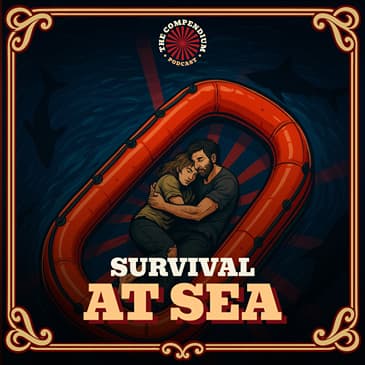
When the Trashman finally foundered, the crew had only moments to abandon ship. A purpose-built life raft with supplies was lost in the chaos, leaving all five people to cling to a much smaller inflatable dinghy. That detail is at the heart of this survival story. They were not setting out with food, water, signalling gear and a functioning plan. They were suddenly adrift without the basics that might have bought them time.
The days that followed were a test of endurance in every sense. Exposure, dehydration, injuries and fatigue were all immediate dangers, but the psychological strain was just as important. The survivors had to deal with cold nights, punishing daytime heat, the sight of distant ships and the uncertainty of whether anyone knew where to find them. Sharks circling the dinghy added a terrifying physical threat, yet the more complicated danger came from the way thirst and sleep deprivation began to alter judgement.
That is where the story becomes much more than a shipwreck account. The Trashman crew were not a unified team with a shared survival strategy. Personal tensions existed before the storm, and the raft magnified every one of them. Deborah and Brad tried to hold onto practical thinking while the others became increasingly unwell. We follow those shifting alliances, the desperate attempts to keep the dinghy stable, and the awful moments when a person’s behaviour no longer makes sense to the people beside them.
It is tempting to reduce the Trashman yacht sinking to its most sensational details: a small raft, shark-infested water and a spectacularly hostile ocean. But the real story is more unsettling because it is so human. A professional delivery, a few missed safeguards and a chain of choices turned a routine passage into a survival situation with almost no margin for error. We keep the final sequence for the podcast itself, including the crucial question of why a rescue did not arrive when the crew expected it to.
Why This Story Matters
The Trashman disaster has remained compelling because it challenges a comforting idea about survival: that experience automatically protects you. Deborah was an accomplished sailor, and several people aboard knew the sea. Yet competence cannot cancel out weather, equipment failure, poor preparation or the fragility of a group under extreme stress. The episode is not about treating the victims as characters in a cautionary tale. It is about understanding how quickly capability can be overwhelmed when several risks collide.
It also gives us a clearer way to talk about the psychology of survival. Hunger and thirst are not just physical discomforts; they affect concentration, decision-making, mood and perception. In the raft, the crew’s condition changed the social world as well as the physical one. Trust became essential, then difficult to maintain. The story asks a quietly brutal question: how do you make good choices when your body is no longer giving you the tools to think clearly?
For Deborah Scaling Kiley, the event did not simply end when the raft was found. Her account, later published as Albatross: The True Story of a Woman’s Survival at Sea, gave the disaster a lasting public record. It also lets us explore the aftermath without pretending there is a neat, triumphant finish to trauma. Survival can be extraordinary and still leave a mark.
We are also interested in why ocean-disaster stories endure. They strip life down to its starkest mechanics: warmth, water, shelter, communication and another person willing to help. The Trashman story has all the ingredients of a nightmare at sea, but its power lies in the choices made long before the dinghy began drifting. If you have ever wondered what happens when a yacht sinks at sea, why dehydration can become so dangerous, or how a rescue operation can lose its way, this is the episode for you.
Topics Include
The 1982 Trashman yacht sinking off the North Carolina coast
Deborah Scaling Kiley and the crew’s ill-fated delivery voyage
Storm damage, emergency preparation and abandoning ship
Survival in a small inflatable dinghy without food, water or signalling gear
Sharks, dehydration and the psychological pressure of being stranded at sea
The unresolved tension around rescue, responsibility and survival
Resources and Further Reading
Albatross: The True Story of a Woman's Survival at Sea - by Deborah Scaling Kiley
Two Came Back (1997) - IMDb
I Shouldn’t Be Alive: Shark Survivor - Discovery Channel
The True Story of the Trashman Yacht Sinking - Survival Stories