
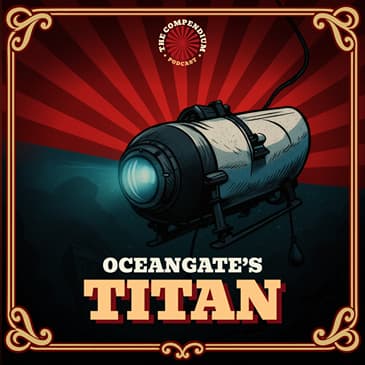
OceanGate sold Titan as a daring shortcut to the Titanic, but its experimental carbon-fibre hull, weak oversight and culture of dismissing warnings created a preventable disaster. On 18 June 2023, five people entered the submersible and never returned.
The Titan story was initially presented as a mystery unfolding in real time. A submersible had lost contact during a dive to the Titanic, rescue ships raced towards the North Atlantic and the world imagined five people waiting in darkness as their oxygen ran out. Later evidence revealed a different reality: Titan had almost certainly imploded shortly after communication was lost, killing everyone aboard instantly.
We’re tracing how OceanGate chief executive Stockton Rush turned deep-sea tourism into a test of personal conviction, why engineers and industry experts warned that Titan’s design demanded far more scrutiny, and what official investigations eventually concluded. The ocean supplied the pressure, but the disaster was shaped on land through years of engineering decisions, damaged relationships and rejected safeguards.
What Happened to the OceanGate Titan?
OceanGate was founded with the aim of making deep-ocean travel more accessible. Rush argued that conventional submersible design was too expensive and slow, and he wanted paying “mission specialists” to help fund expeditions. The wreck of RMS Titanic, resting about 3,800 metres below the Atlantic, offered the perfect combination of scientific interest, prestige and global fascination.
Titan was unlike most deep-diving crewed submersibles. Its pressure vessel combined titanium end caps with a cylindrical hull made primarily from carbon-fibre composite. Carbon fibre is light and strong in many applications, but repeated cycles of enormous external pressure can cause layers to separate and damage to develop internally. Traditional metal pressure hulls have decades of established engineering data; Titan’s large composite structure did not.
OceanGate chose not to have Titan classed by an independent marine certification organisation. Rush portrayed external classification as an obstacle to innovation and argued that real-time acoustic monitoring could warn the crew if the hull began to fail. Critics countered that a warning heard during a deep dive might arrive only after irreversible damage had begun, leaving no time to surface.
Concerns appeared well before the final expedition. OceanGate’s director of marine operations, David Lochridge, produced a report questioning testing and safety. The company dismissed him and pursued legal action after the dispute escalated. Members of the Marine Technology Society also warned Rush in a 2018 letter that OceanGate’s experimental approach could lead to a catastrophic outcome.
Titan nevertheless completed dives to the Titanic in 2021 and 2022. Those successes strengthened Rush’s confidence, but repeated pressurisation may have weakened the structure rather than proved it permanently safe. The craft experienced technical problems, aborted dives and repairs. Official investigators later found that OceanGate’s engineering process did not establish the hull’s true strength or durability across repeated cycles.
On 18 June 2023, Titan began another descent from the support vessel Polar Prince. Aboard were Rush; British businessman and explorer Hamish Harding; Pakistani businessman Shahzada Dawood and his 19-year-old son, Suleman; and French Titanic expert Paul-Henri Nargeolet. The group communicated with the support ship through short text messages while the vessel tracked their position.
About one hour and 45 minutes into the dive, communication stopped. The support crew reported Titan missing, triggering a multinational search involving ships, aircraft and remotely operated vehicles. Public discussion focused on the submersible’s theoretical oxygen supply. Reports of underwater noises briefly raised hope, while experts cautioned that the sounds might be unrelated.
The US Navy had detected an acoustic signal consistent with an implosion around the time Titan disappeared, although that information was not treated as definitive during the search. On 22 June, a remotely operated vehicle found debris near the bow of the Titanic. The Coast Guard announced that the pattern was consistent with a catastrophic loss of the pressure chamber. All five occupants were dead.
The failure would have occurred in a fraction of a second under pressure hundreds of times greater than at the surface. There was no long wait for oxygen and almost certainly no time for those aboard to understand what was happening. The rescue narrative that held the world’s attention was, tragically, taking place after the disaster had already happened.
Investigations examined debris, documents, testimony and OceanGate’s organisational culture. In August 2025, the US Coast Guard Marine Board of Investigation called the casualty preventable. Its report cited inadequate design, testing and maintenance, weak regulatory oversight and a workplace where employees feared that raising safety concerns could damage their careers.
The US National Transportation Safety Board likewise concluded that OceanGate’s inadequate engineering process failed to establish the strength and durability of the pressure vessel. It found that delamination damage in the carbon-fibre hull was worsened by additional damage, leading to local buckling and implosion. Canada’s Transportation Safety Board issued its own findings and recommendations in 2026, highlighting gaps in oversight for submersible operations.
Why This Story Matters
Titan is often described as a story of hubris, but that word can make the failure sound like one man’s personality flaw. The deeper lesson is institutional. Safety-critical engineering depends on independent review, documented testing, conservative margins and the freedom to report problems. Removing those layers concentrated decision-making in the person most committed to proving the vehicle worked.
Innovation and regulation are not natural enemies. Experimental aircraft, spacecraft and submersibles can move technology forward, but human passengers change the ethical calculation. A waiver can describe death as a possibility; it cannot give customers the technical expertise needed to evaluate a novel pressure vessel or substitute for competent design assurance.
We’re also wary of how the Titanic connection shaped the mission. Nargeolet was an experienced explorer, Harding sought extreme adventures and the Dawoods were drawn to a once-in-a-lifetime journey. OceanGate sold proximity to history, but the romance of exploration made it easier to treat warnings as fearfulness and caution as a lack of vision.
The final reports matter because they turn hindsight into prevention. They recommend stronger oversight, clearer jurisdiction and better standards for submersible design and operation. Remembering the five people aboard requires more than fascination with the implosion. It means refusing the idea that safety can be replaced by charisma, novelty or confidence.
Topics Include
Stockton Rush’s vision for commercial Titanic expeditions
Titan’s carbon-fibre pressure hull and lack of classification
Warnings from David Lochridge and marine-industry experts
The final dive, multinational search and debris discovery
The Coast Guard, NTSB and Canadian investigation findings