
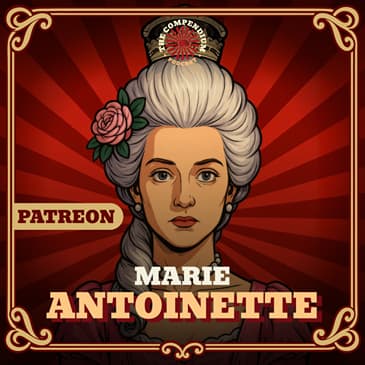
Marie Antoinette became the face of a collapsing monarchy, blamed for extravagance, foreign influence and indifference. Her real life was more complicated than either the hostile pamphlets or romantic legend suggest.
Marie Antoinette’s image has never belonged entirely to the woman herself. During her lifetime, political enemies turned her into a symbol of corruption and sexual disorder. Later generations made her a fashion icon, a tragic mother or a frivolous queen who supposedly told starving people to eat cake. To understand Marie Antoinette, we need to separate the image that survived in popular culture from the chronology preserved in records, testimony and later research. That approach keeps the story compelling without allowing a dramatic claim to outrun the evidence.
What Happened in the Marie Antoinette Story?
Born Maria Antonia in Vienna in 1755, she was a daughter of Empress Maria Theresa and Francis I. Her marriage to the future Louis XVI in 1770 was designed to secure the Franco-Austrian alliance. She entered Versailles at fourteen, where personal behaviour was public ritual and every perceived misstep carried political meaning. That detail is central to understanding Marie Antoinette because it connects the public story to the practical choices that shaped what followed.
The marriage was initially unconsummated and intensely scrutinised. Marie Antoinette sought relief in fashion, theatre, gambling and the Petit Trianon. Her spending was real, but it did not cause France’s fiscal crisis, which was driven by structural taxation problems, debt and costly wars, including support for the American Revolution. Contemporary accounts and later reconstructions do not agree on every minor detail, so the safest reading keeps the documented sequence separate from later embellishment.
She became an easy target as a foreign-born queen. Libelles accused her of affairs, treason and depravity. The Affair of the Diamond Necklace damaged her reputation even though she was not involved. The phrase “let them eat cake” had circulated before her and is not supported by reliable evidence as something she said. Seen in sequence, the event was not an isolated twist but part of a chain in which earlier decisions narrowed the options available later.
The Revolution transformed hostility into direct danger. The royal family was brought from Versailles to Paris in October 1789. Their failed flight to Varennes in 1791 destroyed remaining trust and strengthened claims that the monarchy was conspiring with foreign powers. It is also where popular retellings tend to compress the timeline, turning a complicated development into a single dramatic moment.
After the monarchy fell, Louis XVI was executed in January 1793. Marie Antoinette was separated from her children and tried by the Revolutionary Tribunal in October. Charges included treason and the notorious accusation of incest with her son, which she rejected by appealing to all mothers present. The distinction matters for search readers because it answers not only what happened, but why the episode unfolded in that particular way.
She was convicted and guillotined on 16 October 1793 at the age of 37. Her death did not end the argument over her character. It fixed her in culture as both a product of privilege and a person subjected to misogyny, xenophobia and political propaganda. Later fame has sometimes overshadowed this stage, even though it provides the strongest evidence for how the story actually developed.
Why This Story Matters
Marie Antoinette’s story reveals how a complex crisis can be personalised. It was easier to blame a visible, fashionable queen than to explain taxation, debt, harvest failures and the limits of absolute monarchy. It gives the story significance beyond its most famous image and makes clear why people continue to search for it.
The gendered attacks against her also matter. Political criticism repeatedly became sexual accusation, presenting female influence itself as unnatural and dangerous. That wider context is essential if the episode page is to inform readers rather than simply repeat a familiar headline.
Revisiting her life does not require denying royal privilege. It requires distinguishing genuine choices from invented quotations and recognising how propaganda can become the version of history that everybody remembers. For audiences today, the lasting value lies in recognising the mechanism, not only remembering the outcome.
The timeline also protects against hindsight. Once we know the outcome of Marie Antoinette, earlier warnings can look obvious and every participant can appear to be moving towards a fixed ending. In reality, people around Marie Antoinette acted with partial information, competing loyalties and assumptions that made sense to them at the time. Reconstructing that uncertainty is more accurate than treating the conclusion as inevitable.
Another reason the story continues to attract attention is the gap between the evidence and the version most easily repeated. Terms such as Marie Antoinette biography or let them eat cake myth can lead readers towards a dramatic answer before they have encountered the underlying record. A careful account does not drain the story of suspense; it shows exactly where certainty ends and interpretation begins.
The people and institutions connected to Marie Antoinette did not stop existing when the most famous event ended. Investigations, court decisions, scientific reviews, public memory and commercial retellings continued to reshape what later audiences believed. That afterlife is part of the history, particularly when discussion centres on the flight to varennes and fall of the monarchy and trial, execution and cultural legacy rather than on the original chronology.
The strongest conclusion is therefore a measured one. We can state what documents, physical evidence and reliable testimony establish; we can identify the leading explanation where one exists; and we can label unresolved points honestly. That method makes Marie Antoinette more useful as history because it respects both the reader’s curiosity and the lives changed by the events.
For us, the enduring question is not simply what makes Marie Antoinette fascinating. It is what the evidence asks us to notice about institutions, incentives, memory and human behaviour. The strongest version of this story preserves uncertainty where it exists and gives documented experience more weight than a perfect ending.
Topics Include
Her Austrian childhood and diplomatic marriage
Life and ritual at Versailles
Spending, debt and the Diamond Necklace affair
The myth of “let them eat cake”
The flight to Varennes and fall of the monarchy
Trial, execution and cultural legacy