
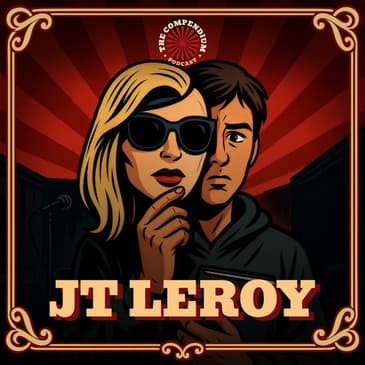
JT LeRoy became a literary sensation through stories of abuse, addiction and survival. Then journalists revealed that the supposedly reclusive young author was a persona created by Laura Albert and performed in public by Savannah Knoop.
By the early 2000s, JT LeRoy seemed to embody the fantasy of literature as rescue. The author was presented as a painfully shy young man who had survived truck stops, exploitation, addiction and life on society's margins before turning those experiences into celebrated fiction. Famous writers, actors and musicians offered encouragement, and readers treated every rare appearance as proof that the extraordinary backstory was real.
The truth was stranger. The voice on the telephone belonged to San Francisco writer Laura Albert, while the slight, wig-wearing figure who appeared at readings and parties was Albert's sister-in-law, Savannah Knoop. We are following how an invented narrator became a public person, why so many sophisticated people accepted the performance and where fiction ends when a fabricated identity is used to build trust.
What Happened in the JT LeRoy Hoax?
Laura Albert began speaking in different voices long before JT LeRoy became famous. During calls to support lines and conversations with therapists, she developed a young male identity that felt safer than speaking as herself. That voice gradually acquired a history, relationships and a name. Albert later described the persona as a survival mechanism, while critics saw the foundation of a calculated deception.
Writing under the name Jeremiah Terminator LeRoy, later shortened to JT, Albert produced work that drew heavily on trauma, sex work, poverty and addiction. The novel Sarah appeared in 2000, followed by The Heart Is Deceitful Above All Things. Publishers marketed the books as autobiographical fiction by a teenage survivor, and the claimed life behind the prose became inseparable from its reception.
JT rarely met anyone in person. Albert maintained the illusion through long telephone calls and emails, often cultivating intense relationships with artists and celebrities. People believed they were supporting a vulnerable young writer who feared exposure. That protective instinct made requests for privacy seem compassionate rather than suspicious and turned absence into evidence of authenticity.
Public success created a practical problem: an author was expected to appear. Savannah Knoop agreed to embody JT, wearing a blond wig, sunglasses and androgynous clothes. Albert sometimes appeared alongside Knoop as Speedie, described as JT's British handler. The performance expanded from readings into festivals, fashion shoots, film discussions and celebrity parties.
The arrangement depended on several different kinds of belief. Some people knew the books were novels but believed the author biography. Others understood that JT used a pseudonym yet assumed the person was real. A smaller circle helped sustain the performance. Because literary culture accepts pen names, cultivated mystique and blurred autobiography, each unusual detail had an innocent explanation when considered alone.
Doubts grew as journalists compared the public figure with the authorial voice. Stephen Beachy's 2005 New York magazine investigation traced JT's contacts and raised the possibility that Laura Albert was the writer. The New York Times later identified Savannah Knoop as the person appearing in public. A mystery once treated as protection for a traumatised author became a documented collaboration.
Albert acknowledged writing the books and speaking as JT but rejected the simple label of fraud. She argued that JT was an artistic and psychological creation through which she could say things otherwise inaccessible to her. That explanation helps us understand the work's origin, but it does not erase the fact that people were encouraged to believe they were interacting with a particular vulnerable person.
The consequences moved beyond embarrassment. Antidote International Films had contracted for an adaptation connected to the claimed life story and successfully sued Albert for fraud in 2007. The case demonstrated that a persona may be artistically meaningful while still creating legal liability when it is used to secure agreements based on false biographical claims.
Knoop's position was different from Albert's. They had performed the visual role rather than written the books or conducted most intimate correspondence. Knoop later described the experience in Girl Boy Girl, reflecting on gender, celebrity and the strange freedom of inhabiting somebody else's identity. Their account complicates any version that treats every participant as having the same motive or power.
The books did not vanish after the exposure. Readers continued to debate whether knowledge of authorship should change their judgement of the prose. Supporters argued that fiction is allowed to invent; critics answered that the marketing invited sympathy, authority and access by presenting invention as lived experience. Both observations can be true, which is why the argument has lasted.
Why This Story Matters
The JT LeRoy story matters because literature often sells an author as carefully as it sells a book. A compelling biography can shape reviews, interviews and emotional investment before a reader reaches the first page. When that biography borrows the authority of abuse, poverty or marginalisation, the ethical stakes become higher than they would be for an ordinary pen name.
It also exposes the power of care. Many people ignored inconsistencies because they did not want to harm someone presented as fragile. That response was humane, not foolish, yet it could be manipulated. We should be able to protect vulnerable voices without treating reasonable verification as cruelty or assuming that scepticism and compassion are opposites.
The case is especially revealing when viewed through gender and identity. Albert said a male persona allowed her to communicate in ways she could not as herself, while Knoop experienced JT as a fluid public role. Those dimensions deserve serious attention, but they do not automatically settle questions about consent, money or the experiences the persona claimed as biography.
Celebrity endorsement accelerated the illusion. Once respected people publicly accepted JT, every new supporter inherited a ready-made reason to believe. The story shows how trust moves through cultural networks: publishers rely on agents, journalists rely on access and friends rely on one another. A fiction can become socially real before anyone deliberately tests its foundations.
Listen for the private telephone relationships, the wig and sunglasses, the shift from page to performance and the moment investigation broke the spell. What remains is not simply a gotcha story about gullible celebrities. It is a difficult question about whether powerful art can excuse the methods used to make an invented life feel true.
Topics Include
Laura Albert's creation of the JT LeRoy voice
Sarah and The Heart Is Deceitful Above All Things
Savannah Knoop's public performance as JT
Celebrity friendships and the culture of literary authenticity
The investigations that exposed the persona
Artistic identity, consent and the 2007 fraud case
Resources and Further Reading
The Heart Is Deceitful Above All Things by JT Leroy
Girl Boy Girl: How I Became JT Leroy by Savannah Knoop
Author: The JT Leroy Story - Documentary
The Cult of JT Leroy by Marjorie Sturm
Who is the Real JT LeRoy? New York Magazine Article by Stephen Beachy