
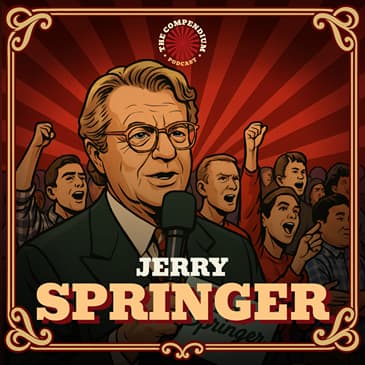
Before reality television perfected the art of public humiliation, The Jerry Springer Show built a daytime empire from secret affairs, flying chairs and a chanting studio audience. Behind the chaos was a former mayor whose journey from serious politics to “trash TV” became one of television’s strangest transformations.
Say the name Jerry Springer and you can almost hear the chant. For nearly three decades, his stage became a place where love triangles exploded, family secrets were revealed and security guards waited for the next fight. The programme was mocked as the worst television imaginable, yet millions watched it, competitors copied it and its influence spread far beyond daytime TV. Long before social media rewarded outrage by the second, Springer showed just how profitable spectacle could be.
We go behind the scenes of The Jerry Springer Show to understand how an earnest public-affairs programme became a global byword for trash TV. That story begins with a refugee family, an ambitious lawyer and a political career that survived a scandal which should have ended it. It then moves into a television production under pressure to find an audience at almost any cost. The fights are unforgettable, but the real questions sit behind the cameras: how much was authentic, how much was encouraged, and what happened when real people were turned into entertainment?
What Happened Behind the Scenes of The Jerry Springer Show?
Jerry Springer’s route to daytime television was anything but obvious. Born in London in 1944 to German Jewish refugees, he grew up in New York and developed an early fascination with politics. He studied political science, earned a law degree and worked on Robert F. Kennedy’s 1968 presidential campaign. After moving to Cincinnati, Springer won a seat on the city council and built a reputation as an energetic young progressive.
Then came the scandal that would follow him for the rest of his life. A police investigation into a massage parlour uncovered a cheque Springer had written for sex. He admitted what he had done and resigned from the council. Instead of disappearing, he faced the public with an extraordinary degree of candour, rebuilt his support and won election again. He later served a one-year term as mayor of Cincinnati. His political comeback revealed a talent that would prove vital on television: Springer could stand in the middle of embarrassment, acknowledge the mess and keep the audience with him.
After an unsuccessful run for governor of Ohio, he moved into local broadcasting. Springer became a successful news anchor and commentator at WLWT, winning multiple regional Emmy awards. His thoughtful closing commentaries often ended with the instruction to “take care of yourselves, and each other”, a phrase that would later survive amid the brawls and betrayals of his talk show. When The Jerry Springer Show launched in 1991, it was built around serious discussion rather than theatrical confrontation. Guests debated homelessness, racism, the AIDS crisis and other social issues.
The responsible version struggled. By 1994, weak ratings threatened the programme’s survival, and executive producer Richard Dominick helped push it towards younger audiences, sharper subjects and stories that worked even with the sound turned down. The transformation was gradual and then unmistakable. Political discussions gave way to infidelity, secret partners, unusual relationships and carefully constructed confrontations. Guests did not simply tell a story; they were brought onstage to reveal it to somebody who might respond with shock, rage or violence.
That format turned the audience into part of the machinery. They booed, cheered, insulted guests and chanted Jerry’s name as security separated another fight. Springer himself played the apparently reasonable ringmaster. He cracked jokes, asked simple questions and ended each programme with a moral reflection, creating a bizarre contrast between the mayhem and his final thought. Was he condemning the behaviour, observing it or quietly licensing it? That ambiguity became central to his appeal.
Questions about authenticity followed the show throughout its run. Former guests and journalists described coaching, embellished backstories and pressure to make confrontations more dramatic. Producers said they were finding extraordinary real-life stories and preparing people for television; critics argued that the system rewarded deception and deliberately escalated conflict. Some guests unquestionably fooled the production with invented scenarios, while others said a small truth had been expanded into something far more sensational. The result sat somewhere between talk show, tabloid and professional wrestling.
The fights were valuable because viewers responded to them. At its late-1990s peak, Springer briefly overtook The Oprah Winfrey Show in daytime ratings, an achievement that stunned the television industry. When the show’s owners announced that physical violence would be removed, ratings suffered and confrontation soon returned. Advertisers remained wary even while audiences grew, revealing the strange economics of a programme that was both enormously popular and commercially embarrassing.
The human consequences were harder to dismiss. One of the darkest controversies followed an episode featuring Nancy Campbell-Panitz, her former husband Ralf and his new wife, Eleanor. The televised humiliation became entangled with a real and deadly domestic conflict after the cameras stopped. A later lawsuit accused the programme of creating a dangerous atmosphere, while the producers denied responsibility and stressed the time between filming and the crime. We take care not to reduce Nancy’s death to a piece of TV trivia; it forces us to ask where entertainment ends when producers deliberately intensify real hostility.
The show also attracted criticism for normalising violence, exploiting vulnerable guests and treating marginalised people as spectacle. At the same time, it put lives and identities on television that mainstream programmes often excluded. For some viewers, Springer was their first exposure to transgender guests or unconventional relationships. Visibility, however, is not automatically respectful representation. The programme could offer someone a microphone while still placing them inside a format designed for ridicule.
By the time The Jerry Springer Show ended in 2018, it had produced thousands of episodes and changed the language of television. Springer appeared in films and sitcoms, hosted other programmes and became the inspiration for Jerry Springer: The Opera, a profane stage satire that turned the show’s moral contradictions into music. He sometimes defended his programme as harmless escapism and sometimes described it as a democratic platform for people without wealth or influence. He also admitted it was an easy and lucrative job that he did not watch himself.
Why This Story Matters
Jerry Springer matters because the programme anticipated the media environment we now inhabit. Its producers learned that anger holds attention, humiliation travels and extreme behaviour creates repeatable content. Today those incentives are embedded in reality television, viral clips, reaction videos and social platforms. Springer did not invent every part of that economy, but it demonstrated the model with extraordinary clarity.
The story also complicates easy judgements about Jerry himself. He was an intelligent, politically engaged broadcaster who could speak with empathy and humour. That did not prevent him from fronting a format built around people at their most exposed. His calm persona made the chaos easier to consume, while the final moral offered viewers a way to feel that the programme had meant something. The contradiction was not an accident; it was part of the product.
We are left with difficult questions rather than a simple verdict. Did the show reveal parts of American life that polite television ignored, or did it manufacture a cruel caricature of ordinary people? Could guests truly consent when they did not know the revelation waiting onstage? Who carried the consequences after the audience went home? The full story moves from Cincinnati politics to ratings warfare, backstage manipulation, tragedy and opera. Listen to hear how one failed political future helped create the television culture that surrounds us now.
Topics Include
Jerry Springer’s political career and Cincinnati comeback
How The Jerry Springer Show abandoned serious television
Richard Dominick, guest coaching and staged-conflict allegations
The famous fights and ratings battle with Oprah Winfrey
The Nancy Campbell-Panitz tragedy and questions of responsibility
Jerry Springer: The Opera and the show’s cultural legacy
Resources and Further Reading
Jerry Springer: The Opera (2003) - Wikipedia
The Rise and Fall of Jerry Springer - The Guardian
Netflix Documentry Jerry Springer: Fights, Camera, Action - Netflix