
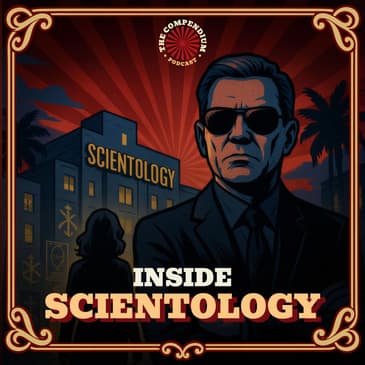
Shelly Miscavige, wife of Scientology leader David Miscavige, has barely been seen in public since 2007. Her absence inspired a missing-person report, years of speculation and a question that still follows the Church of Scientology: where is Shelly Miscavige, and why has nobody heard directly from her?
The mystery of Shelly Miscavige sits inside a much larger story about secrecy, authority and what happens when an organisation controls nearly every route to the outside world. It is important to begin with what we do know: police have said a missing-person report was investigated and classified as unfounded, while the Church of Scientology has repeatedly said Shelly is not missing and is privately devoted to church work.
That has not ended public concern. Former members describe a system in which senior Sea Org staff can be reassigned, disciplined and cut off from family with little outside scrutiny. We examine the history of Scientology, David Miscavige’s rise to leadership and the allegations made by defectors, while clearly separating documented events from claims the church disputes and theories that cannot currently be proved.
What Happened to Shelly Miscavige?
Scientology grew from the ideas of science-fiction writer L. Ron Hubbard, beginning with Dianetics in 1950 and developing into a religious movement. Its practices include auditing, a form of structured spiritual counselling, and a progression through courses intended to free a person from harmful experiences and advance their spiritual abilities. The church has attracted devoted members as well as sustained controversy over its finances, disciplinary practices and response to critics.
The Sea Organization, or Sea Org, is Scientology’s elite religious order. Members sign symbolic billion-year contracts, reflecting the belief that they will continue serving across future lifetimes. They live communally, work long hours and staff important church facilities. Scientology describes Sea Org membership as voluntary religious dedication. Former members have alleged severe control, low pay, punishment and intense pressure against leaving.
David Miscavige joined Scientology as a teenager and entered the Sea Org. He became close to Hubbard and rose rapidly through the organisation. After Hubbard’s death in 1986, Miscavige emerged as Scientology’s dominant leader and chairman of the Religious Technology Center. The church credits him with preserving Hubbard’s teachings and expanding facilities around the world.
Critics tell a different story. Former senior officials have accused Miscavige of physical and psychological abuse, public humiliation and confining executives in a restricted area they called “the Hole”. Miscavige and the Church of Scientology deny allegations that he assaulted staff or operated an abusive system. Any account of Scientology has to hold those denials alongside the extensive testimony from people who say they witnessed or experienced mistreatment.
Michele “Shelly” Barnett grew up within Scientology and became a member of Hubbard’s Commodore’s Messenger Organization as a child. She later married David Miscavige and worked as his assistant. Former insiders describe her as a constant presence beside him at official events, involved in schedules, staff and sensitive church matters.
Her public visibility changed in 2007. Shelly was absent from the wedding of Tom Cruise and Katie Holmes, an event at which her husband served as best man. Former Scientologists have offered various explanations for a reported falling-out, including claims that she reorganised staff while David was away. Those accounts are allegations, not an established public finding, but they helped turn her absence into an enduring mystery.
Some reports place Shelly at a Church of Spiritual Technology property near Twin Peaks, California. The CST is connected with Scientology’s effort to preserve Hubbard’s writings for the future, including archives stored on durable materials. The secluded mountain facility is often mentioned by former members, but members of the public cannot simply enter and verify who lives or works there.
After actress Leah Remini left Scientology, she filed a missing-person report with the Los Angeles Police Department in 2013. The LAPD closed the case as unfounded after officers said they had located and spoken with Shelly. Police have not released details that would satisfy critics, citing privacy. In 2022, the department said the missing-person case had been closed and was not active, while acknowledging public claims surrounding the investigation.
The church has consistently maintained that Shelly is living a private life dedicated to Scientology and has condemned suggestions that she is missing. Its position is that critics are exploiting her privacy to attack the religion. Remini and other former members argue that a welfare check does not answer whether Shelly can communicate freely, leave her assignment or speak publicly without organisational pressure.
That distinction is central. “Missing” has a specific meaning in police work, and the LAPD’s conclusion matters. At the same time, an adult being physically located does not resolve every concern about coercion or isolation. There is no verified public evidence that Shelly is dead, secretly imprisoned or the victim of a crime. There is also no recent direct public account from Shelly capable of ending the speculation.
Celebrity has amplified the story. Scientology’s relationships with Tom Cruise, John Travolta and other famous members made its leadership globally recognisable, while documentaries and Leah Remini’s television work brought former-member allegations to a vast audience. The church says these programmes rely on embittered apostates and false claims; their participants say publicity is one of the few protections available against a powerful institution.
Scientology’s approach to opponents forms part of that context. Hubbard formalised policies for handling perceived attackers, and journalists and former members have described litigation, surveillance and aggressive investigations. The church argues that it defends itself from discrimination and misinformation. Critics point to historic operations against authors and government agencies as evidence that scrutiny can carry a personal cost.
Why This Story Matters
The Shelly Miscavige mystery matters because legal adulthood, religious freedom and personal autonomy can be difficult to separate. Adults may choose secluded religious lives, demanding work and limited contact with outsiders. Concern becomes justified when an institution may control information, relationships and the consequences of leaving. Without Shelly’s independent public voice, outsiders are left interpreting statements made around her.
The story also tests how responsibly we handle uncertainty. Search interest rewards dramatic claims such as “vanished” or “missing wife”, but those phrases can turn suspicion into assumed fact. We do not claim to solve Shelly’s whereabouts. We examine why the official police conclusion has not quieted concern and why former members interpret silence differently from the church.
Listen to our full discussion for the origins of Scientology, Sea Org life, David Miscavige’s rise, the disputed abuse allegations and the timeline that made Shelly’s absence one of the most persistent questions surrounding the organisation.
Topics Include
L. Ron Hubbard and the origins of Scientology
David Miscavige’s rise to church leadership
The Sea Org and allegations from former members
Shelly Miscavige’s last widely reported public appearances
Leah Remini’s missing-person report and the LAPD response
What is known, disputed and still unverified
Resources and Further Reading
Going Clear: Scientology, Hollywood, and the Prison of Belief by Lawrence Wright
Inside Scientology: The Story of America's Most Secretive Religion by Janet Reitman
Leah Remini's Scientology and the Aftermath (TV Series)
Bare-Faced Messiah: The True Story of L. Ron Hubbard by Russell Miller
The Unbreakable Miss Lovely: How the Church of Scientology Tried to Destroy Paulette Cooper by Tony Ortega