
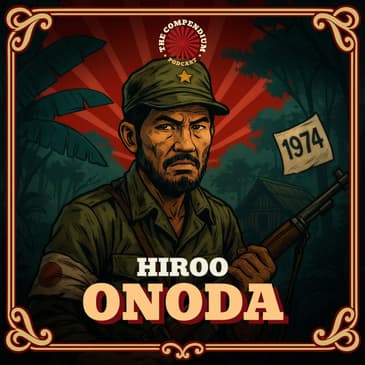
Hiroo Onoda continued fighting on the Philippine island of Lubang for nearly twenty-nine years after Japan surrendered. His return in 1974 became a story of loyalty, isolation and the civilians caught in a war he believed had never ended.
When Hiroo Onoda emerged from the jungle in March 1974, his uniform was patched but recognisable, his rifle still worked and he was prepared to report to a commander from a war that had ended in 1945. Japan received him as a living connection to an imperial past that many people were still struggling to understand.
The image of the solitary soldier is powerful, but it is incomplete. Onoda survived with companions for years, dismissed leaflets and family messages as enemy tricks, took food from islanders and participated in violent clashes that continued long after liberation. We are examining both the extraordinary endurance and the cost imposed on people who knew the war was over.
What Happened to Hiroo Onoda on Lubang?
Onoda was born in 1922 and entered the Imperial Japanese Army during the Second World War. He received intelligence and guerrilla training at the Futamata branch of the Nakano School, where soldiers learned sabotage, survival and methods for operating behind enemy lines. That specialised instruction shaped the way he later interpreted every attempt to reach him.
In late 1944, he was sent to Lubang, an island near the entrance to Manila Bay. His orders were to disrupt enemy operations, preserve equipment and continue resistance. Most importantly, he understood that he must not surrender or take his own life and that a superior officer would eventually return to relieve him.
American forces landed in February 1945 and overwhelmed the Japanese garrison. Onoda withdrew into the mountains with Yuichi Akatsu, Kinshichi Kozuka and Shoichi Shimada. Japan announced its surrender that August, but the four men treated news of defeat as psychological warfare. Their training had taught them to expect deception.
Leaflets were dropped over the island, including surrender orders and later letters and photographs from relatives. To people outside the jungle, the evidence appeared overwhelming. Onoda found inconsistencies in phrasing, dates and circumstances and interpreted them as mistakes by the enemy. Each unsuccessful appeal strengthened the group's belief that the campaign against them was elaborate.
Survival depended on careful observation and taking resources from local communities. The men gathered coconuts and bananas, killed cattle and moved camps to avoid patrols. They maintained their weapons and uniforms as best they could. Seasonal patterns became their calendar, while distant aircraft and international events were fitted into a continuing theory of global war.
Akatsu left the group in 1949 and surrendered in 1950. His departure did not persuade the others. Shimada was wounded during a clash with a search party and was killed in 1954. Onoda and Kozuka continued together for eighteen more years, conducting raids and burning harvested rice in the belief that they were damaging enemy supply operations.
The violence was real. Philippine accounts attribute killings and injuries to Onoda and his companions during their years in hiding. Numbers vary, and some deaths occurred in armed encounters, but the holdouts were not harmless hermits. Farmers and police on Lubang experienced them as an ongoing threat rather than romantic survivors.
Kozuka was killed by police in October 1972 while he and Onoda were burning rice. News of the clash convinced Japan that Onoda might still be alive, and search parties returned. He remained hidden until 1974, when young Japanese traveller Norio Suzuki set out with the improbable ambition of finding Onoda, a panda and the Abominable Snowman.
Suzuki located Onoda after only a few days and won enough trust to speak with him. Onoda explained that he would surrender only if formally ordered by his commanding officer. The Japanese government found Major Yoshimi Taniguchi, then working as a bookseller, and brought him to Lubang to issue the promised command.
On 9 March 1974, Taniguchi read orders ending Onoda's mission. The following day Onoda formally surrendered, presenting his sword to Philippine president Ferdinand Marcos. He also handed over a working rifle, ammunition and grenades. Marcos pardoned him for acts committed in the belief that he was still at war.
Onoda returned to a Japan transformed by prosperity, democracy and American alliance. Some greeted him as an example of discipline and loyalty; others saw an uncomfortable symbol of militarism. He later moved to Brazil, wrote a bestselling memoir and established educational camps for young people before dying in 2014.
Why This Story Matters
Onoda's story matters because obedience can survive long after the institution giving the order has disappeared. His determination was not simply personal stubbornness. Military training, imperial ideology and a precise promise from a superior formed a framework that made contrary evidence look like enemy manipulation.
That psychology feels familiar in an age of misinformation. Once every newspaper, photograph or family message can be explained as part of a plot, evidence loses its corrective power. We should not casually diagnose Onoda from a distance, but his experience shows how a closed belief system can turn failed predictions into further proof.
The heroic version also reveals whose memory receives attention. Japan celebrated a soldier returning from the past, while families on Lubang remembered stolen cattle, burned crops, fear and death. Both histories belong to the same thirty years. Admiring survival cannot require us to erase those who paid for it.
His surrender was moving because Taniguchi restored a relationship of authority that Onoda still recognised. Suzuki could find him and offer friendship, but only the former commander could end the mission. The moment demonstrates that identity is social: Onoda needed the world that had sent him into the jungle to tell him he could finally leave it.
Listen for the guerrilla orders, the dismissed leaflets, the loss of each companion, Suzuki's unlikely search and Taniguchi's final command. The story is extraordinary, but its value lies in resisting a simple label. Onoda was survivor, soldier, believer and source of suffering at the same time.
Topics Include
Onoda's training at the Nakano School
The 1945 battle for Lubang and the order never to surrender
Akatsu, Shimada and Kozuka in the jungle
Leaflets and family messages dismissed as enemy propaganda
Norio Suzuki and Major Yoshimi Taniguchi
The 1974 surrender and the Philippine memory of the holdouts
Resources and Further Reading
"No Surrender: My Thirty-Year War" by Hiroo Onoda - The autobiography that dives into the mind of the man himself.
“Hiroo Onoda, Soldier Who Hid in Jungle for Decades, Dies at 91”- The new York Times Article
"The Psychology of War and Peace" by Robert J. Lifton - A look into the psyche of soldiers in prolonged isolation.