
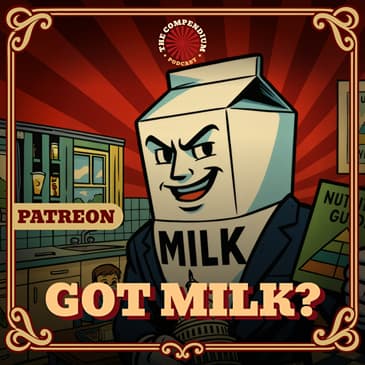
American dairy is not simply a story of farmers meeting consumer demand. Government price supports, surplus cheese, nutrition policy and famous advertising campaigns helped create and protect a vast market.
“Got Milk?” became one of advertising’s most recognisable questions, but the campaign sits inside a much larger system. For decades, US policy tried to stabilise farm incomes, absorb surplus production and promote dairy consumption, sometimes placing public-health advice and agricultural economics in uncomfortable proximity. To understand American dairy industry, we need to separate the image that survived in popular culture from the chronology preserved in records, testimony and later research. That approach keeps the story compelling without allowing a dramatic claim to outrun the evidence.
What Happened in the American dairy industry Story?
Federal intervention in dairy expanded during the twentieth century because milk is perishable, production cannot be switched off quickly and prices can collapse when supply exceeds demand. Supports and purchasing programmes aimed to protect farmers, but they also encouraged production that had to be stored or redirected. That detail is central to understanding American dairy industry because it connects the public story to the practical choices that shaped what followed.
During the late 1970s and early 1980s, government purchases contributed to enormous stocks of cheese, butter and powdered milk. The Reagan administration distributed “government cheese” through food-assistance programmes while also paying some producers to reduce herds under the Milk Diversion Program. Contemporary accounts and later reconstructions do not agree on every minor detail, so the safest reading keeps the documented sequence separate from later embellishment.
Promotion became another outlet. The California Milk Processor Board launched “Got Milk?” in 1993, using deprivation rather than health claims: people discovered at the worst possible moment that food such as biscuits was difficult to enjoy without milk. The national milk-moustache campaign added celebrity endorsement. Seen in sequence, the event was not an isolated twist but part of a chain in which earlier decisions narrowed the options available later.
Industry-funded checkoff programmes collected mandatory assessments from producers and used the money for marketing and partnerships. Dairy Management Inc. worked with major food brands to increase cheese use, including menu development that could boost dairy consumption even as fluid-milk drinking declined. It is also where popular retellings tend to compress the timeline, turning a complicated development into a single dramatic moment.
The USDA has responsibilities that can pull in different directions. It publishes nutrition guidance and administers food programmes while also supporting agricultural producers. That does not prove that every recommendation is corrupt, but it creates a policy tension worth examining with precise evidence rather than sweeping claims. The distinction matters for search readers because it answers not only what happened, but why the episode unfolded in that particular way.
Milk provides protein, calcium and other nutrients, while fortified products can supply vitamin D. It is not indispensable for every person, and lactose intolerance is common globally. A responsible account separates critique of subsidy and marketing systems from absolute claims that all dairy is either essential or harmful. Later fame has sometimes overshadowed this stage, even though it provides the strongest evidence for how the story actually developed.
Why This Story Matters
The dairy story shows how markets are built through policy as well as preference. Prices, school procurement, research and advertising can make a product feel culturally inevitable. It gives the story significance beyond its most famous image and makes clear why people continue to search for it.
It also illustrates why nutrition debates become polarised. Industry influence deserves scrutiny, but health conclusions must reflect total diet, individual tolerance and the quality of independent evidence. That wider context is essential if the episode page is to inform readers rather than simply repeat a familiar headline.
For consumers, the useful question is not whether milk is morally good or bad. It is who funded the message, which outcome was measured and whether agricultural goals are being presented as universal nutritional necessity. For audiences today, the lasting value lies in recognising the mechanism, not only remembering the outcome.
The timeline also protects against hindsight. Once we know the outcome of American dairy industry, earlier warnings can look obvious and every participant can appear to be moving towards a fixed ending. In reality, people around USDA acted with partial information, competing loyalties and assumptions that made sense to them at the time. Reconstructing that uncertainty is more accurate than treating the conclusion as inevitable.
Another reason the story continues to attract attention is the gap between the evidence and the version most easily repeated. Terms such as Got Milk campaign history or US dairy subsidies can lead readers towards a dramatic answer before they have encountered the underlying record. A careful account does not drain the story of suspense; it shows exactly where certainty ends and interpretation begins.
The people and institutions connected to American dairy industry did not stop existing when the most famous event ended. Investigations, court decisions, scientific reviews, public memory and commercial retellings continued to reshape what later audiences believed. That afterlife is part of the history, particularly when discussion centres on the usda’s dual responsibilities and what nutrition evidence can and cannot show rather than on the original chronology.
The strongest conclusion is therefore a measured one. We can state what documents, physical evidence and reliable testimony establish; we can identify the leading explanation where one exists; and we can label unresolved points honestly. That method makes American dairy industry more useful as history because it respects both the reader’s curiosity and the lives changed by the events.
For us, the enduring question is not simply what makes American dairy industry fascinating. It is what the evidence asks us to notice about institutions, incentives, memory and human behaviour. The strongest version of this story preserves uncertainty where it exists and gives documented experience more weight than a perfect ending.
Topics Include
Why dairy markets receive government support
The 1980s surplus and government cheese
The creation of the Got Milk? campaign
Dairy checkoff programmes and fast-food partnerships
The USDA’s dual responsibilities
What nutrition evidence can and cannot show