
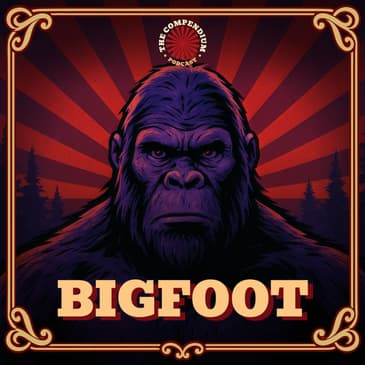
Bigfoot is said to be a large, upright, ape-like creature hidden in the forests of North America. Footprints, eyewitness accounts and one famous film have sustained the legend, but no verified body, bone or DNA sample has established that it exists.
The creature has many names: Bigfoot, Sasquatch and, in older traditions, names rooted in Indigenous cultures that do not map neatly onto the modern monster. Today it sits between folklore and zoology. Believers argue that vast forests could conceal a rare primate; sceptics point to hoaxes, mistaken bears and the absence of physical remains.
We are following the tracks from nineteenth-century reports to the Patterson–Gimlin film and modern DNA claims. The interesting question is not only whether Bigfoot is real. It is why ambiguous evidence has proved so durable, and what the search reveals about wilderness, belief and our desire for the world to remain mysterious.
What Happened in the Search for Bigfoot?
Stories of wild, hairy beings existed long before the word Bigfoot. Indigenous nations across the Pacific Northwest preserved distinct accounts with their own meanings, while settlers reported "wild men" in newspapers and campfire tales. Combining all of those traditions into a single species risks flattening very different cultures, but they helped create the landscape into which the modern legend emerged.
The name Bigfoot entered popular use after large footprints were reported around a construction site at Bluff Creek, California, in 1958. Newspaper coverage transformed local tracks into a national curiosity. Years later, relatives of logger Ray Wallace said he had used carved wooden feet to create some prints. That revelation damaged one famous origin story, though it did not explain every report.
The defining evidence arrived in October 1967, when Roger Patterson and Bob Gimlin filmed a dark, hairy figure walking across a sandbar at Bluff Creek. The subject turns towards the camera before disappearing into the trees. Enlarged frames produced the familiar image of "Patty", and the short film became the visual template for almost every later Bigfoot depiction.
Supporters see proportions, muscle movement and a flexible stride that they believe would have been difficult to fake with a 1960s costume. Sceptics note Patterson's prior interest in making a Bigfoot film, the lack of an original creature for examination and claims by people who said a suit or performance was involved. Decades of analysis have not produced agreement because image interpretation cannot replace a specimen.
Footprints remain another major category of evidence. Some casts show dermal ridges or unusual foot mechanics; others have obvious carving marks or are linked to admitted hoaxers. A genuine trackway could be valuable if independently documented with clear provenance. Most arrive after the event, however, when weather, soil and handling make confident conclusions difficult.
Eyewitnesses often describe enormous height, long arms, a powerful smell and a human-like walk. Many witnesses appear sincere, but sincerity does not guarantee identification. Bears can stand and move on two legs, distances in forests are hard to judge and memory changes as people retell a frightening encounter. Darkness and expectation can turn a brief shape into a complete animal.
Audio recordings of howls and wood knocks add atmosphere but rarely identify a unique source. Known animals, people and environmental sounds can produce surprising calls. Thermal images have the same limitation: they may show something warm moving through trees without establishing what it is.
DNA appears to offer a decisive route. Hair, saliva or tissue from an unknown primate should be testable against genetic databases. Published surveys of alleged samples have generally identified known animals such as bears, deer, cattle, dogs or humans. Claims of unique Bigfoot DNA have faced criticism over contamination, methods and publication standards.
Ecology creates the largest challenge. A breeding population of large primates would require food, territory and sufficient numbers to avoid inbreeding. It should leave bodies, bones, droppings, nests and repeated genetic traces. North American forests are extensive, but they are also crossed by roads, hunters, researchers, trail cameras and logging operations.
That absence does not prove that every witness is lying. Reports can include misidentification, folklore, pranks and sincere experiences that remain unexplained. Cryptozoology is most useful when it treats those categories separately rather than presenting any unknown noise or footprint as evidence of a new species.
Why This Story Matters
Bigfoot matters because it tests how we handle uncertainty and incomplete scientific information. A blurry film invites viewers to complete the image using what they already believe. Believers notice anatomy that seems impossible to fake; sceptics notice the circumstances that make a hoax plausible. Both can become more confident while looking at the same frames.
The legend also expresses a wish that wilderness still contains something beyond human control. As forests are mapped, logged and monitored, Bigfoot represents a surviving border between the known and unknown. Finding it would transform zoology; failing to find it allows the possibility to remain alive.
Hoaxes have consequences beyond entertainment. They consume researchers' time, encourage harassment of witnesses and make careful investigation harder. At the same time, automatic ridicule can silence people who honestly misidentified something or experienced an event they cannot explain.
A scientific approach does not require contempt. It asks whether evidence can be independently tested, whether alternative explanations have been excluded and whether claims become more precise over time. An extraordinary animal would not need perfect proof at first, but it would eventually need physical evidence that survives scrutiny.
Listen to the episode for the classic encounters, the Patterson–Gimlin debate, footprint hoaxes and controversial DNA claims. Bigfoot remains culturally real even if the biological creature is not established, and that may explain why the tracks never quite disappear.
Topics Include
Indigenous traditions, wild-man stories and the modern Sasquatch legend
The 1958 Bluff Creek footprints and Ray Wallace hoax claims
The 1967 Patterson–Gimlin film and arguments over "Patty"
Eyewitness testimony, bears, tracks, calls and thermal images
DNA testing and why alleged samples usually identify known animals
What a breeding population would leave behind in North American forests
Resources and Further Reading
“Todays Shownotes” (videos & pictures)
"Bigfoot encounters" by classics web
“Melba Ketchum” the observer