
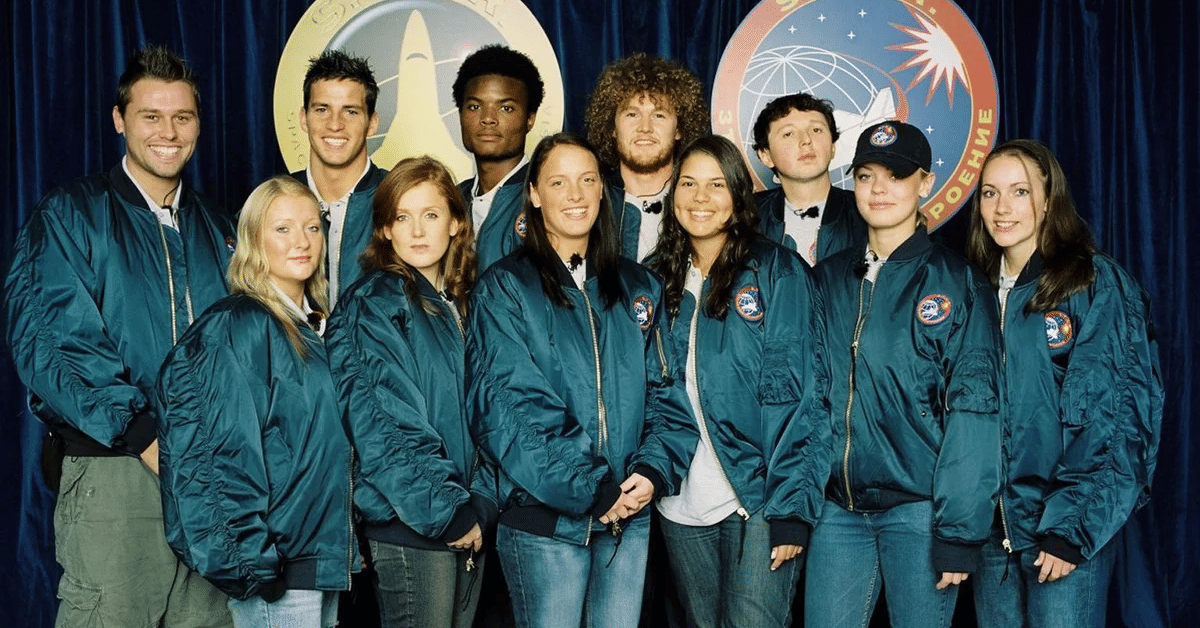
In true weird Compendium style we are brining you the wild story of how in 2005, Channel 4 decided to send a group of ordinary Brits into orbit. At least, that’s what they told them. The show was called Space Cadets, and over ten nights it became the most elaborate hoax in British television history. Contestants believed they’d trained as cosmonauts, boarded a shuttle, and blasted into space. In reality, they never left a disused airbase in Ipswich.
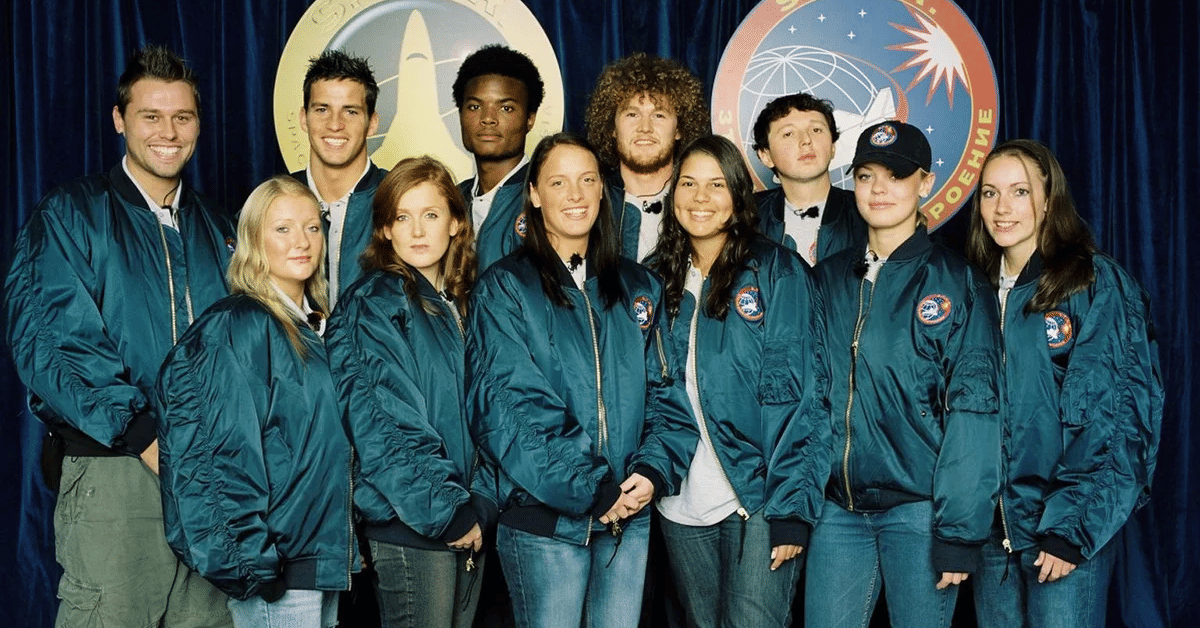
Nearly twenty years later, the story still feels too bizarre to be true. And yet, somehow, it happened. Here’s how Endemol, the company behind Big Brother, convinced a dozen people they’d left Earth — and why they believed it.
What Was Space Cadets on Channel 4?
Space Cadets was a reality TV show aired on Channel 4 in December 2005. The premise was simple but audacious: trick a group of contestants into believing they’d become Britain’s first space tourists. Hosted by Johnny Vaughan, the series ran for ten consecutive nights and followed a carefully staged “training programme” before four finalists were selected to board a shuttle simulator.
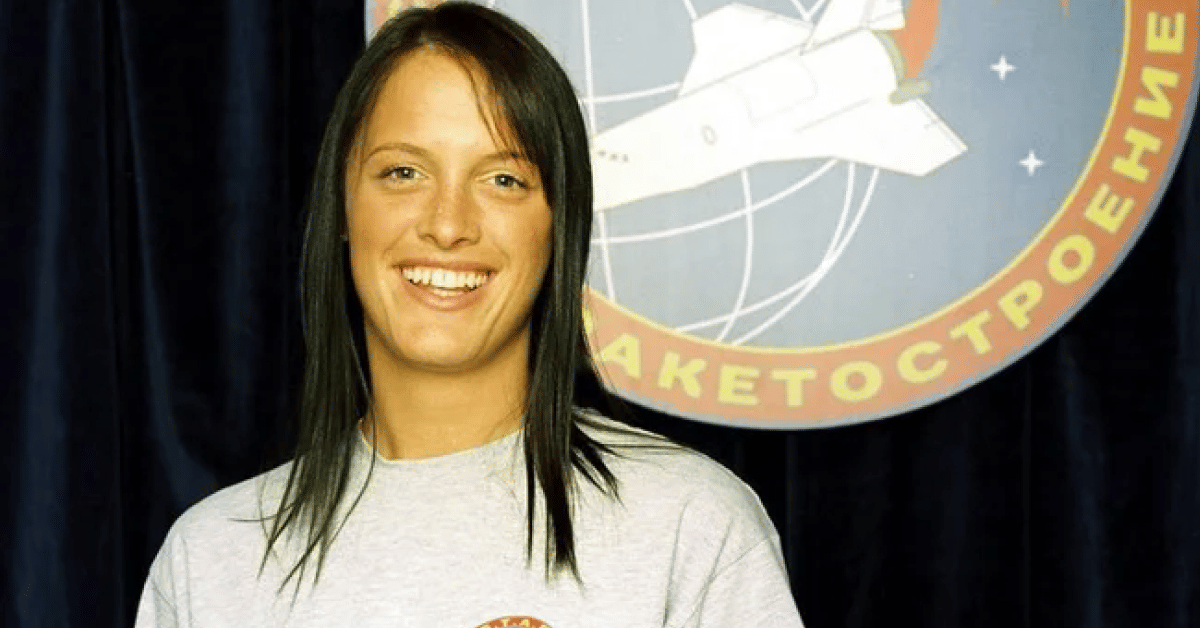
The show was produced by Endemol, the same company responsible for Big Brother. With a budget of around £5 million, they built an elaborate Russian “training base” in Suffolk, complete with fake guards, authentic signage, and a Hollywood-level shuttle simulator. The contestants genuinely believed they had been flown to Russia and launched into orbit.
How Did Producers Fake Space on Space Cadets?
Producers created the illusion with meticulous detail.
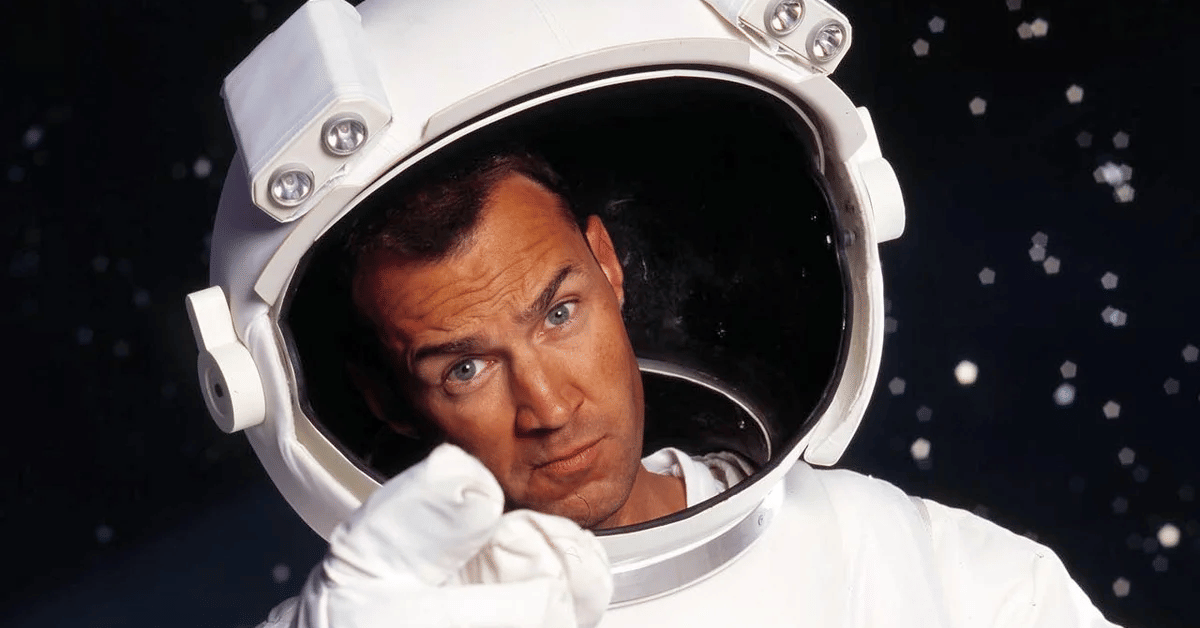
In short: they built a shuttle simulator, hired Russian-speaking actors, and staged the entire training process inside an abandoned RAF base in Ipswich.
Fake Shuttle: A full-scale simulator with hydraulics and projection screens showed “Earth” through the windows.
Russian Base: Every socket, sign, and scrap of rubbish was swapped for Russian equivalents to sell the illusion.
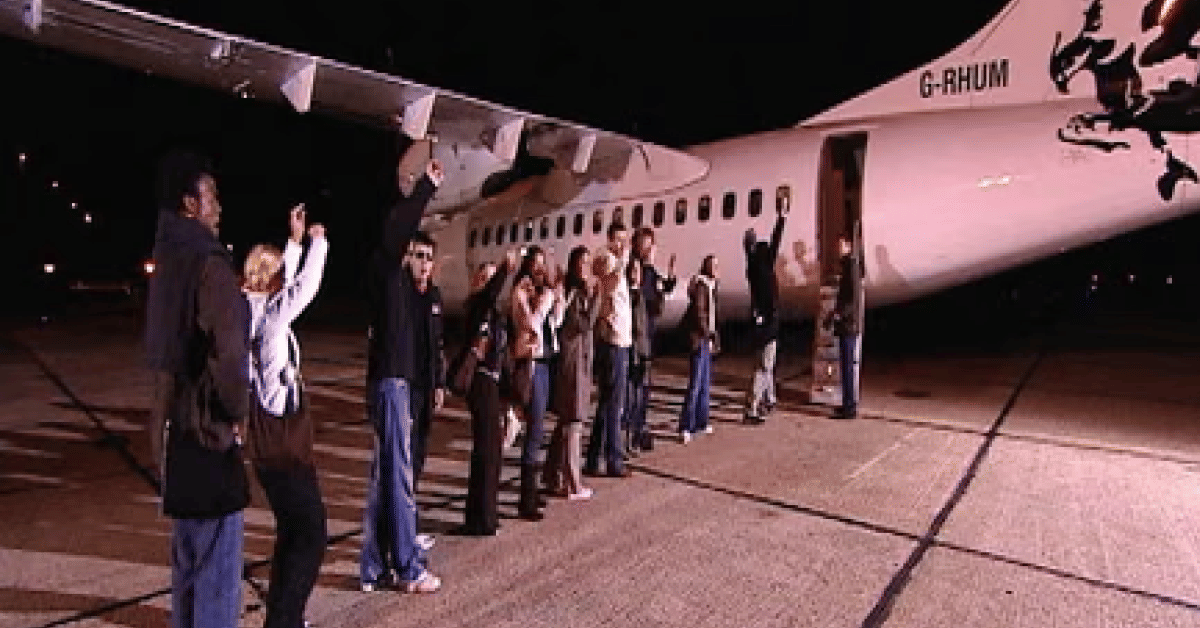
Flights & Transfers: Contestants were flown in circles over the North Sea at night, convinced they were travelling to Russia, then secretly bused into Suffolk.
Lectures & Training: Experts (actually actors) explained concepts like “near space” and “gravity generators” with enough authority that contestants dutifully took notes.
The detail was so convincing that even small mistakes — like a moth’s shadow accidentally projected onto Earth — didn’t break the spell.
Why Did Contestants Believe the Space Cadets Hoax?
It’s easy to laugh at the gullibility of the cadets, but the psychology behind the hoax was carefully engineered.
Here’s the short answer: contestants were chosen specifically for their suggestibility and willingness to believe.
Producers cut anyone with scientific knowledge, military backgrounds, or even too much enthusiasm for space. Instead, they wanted intelligent but compliant personalities — people who would trust authority, go along with the group, and embrace the absurd if it came with a serious face.
The contestants were also completely isolated from friends and family, kept in a bubble where the only “reality” was the one the show provided. Add in peer pressure, the allure of being part of history, and the relentless reinforcement from planted actors — and you get a situation where doubt gets drowned out by belief.
What Happened During the Fake Mission?
Four finalists — Paul, Kerry, Billy, and Charlie (an undercover actor) — were chosen to board the shuttle. Over five days they experienced simulated launches, “orbiting” Earth, and video messages of support from celebrities and even a mention that the Queen was watching.
The simulator’s hydraulics shook them gently during take-off. The windows showed pre-recorded Earth footage. And yet, the cadets described the launch as smooth and profound. In their diary room confessions, they spoke with awe about the experience of “being in space.”
By the end, when the reveal came, they were shocked but not humiliated. They admitted they’d been fooled, but said the illusion had been strong enough to believe.
What Was the Fallout of Space Cadets?
When the reveal happened, producers braced for disaster. A doctor and psychologist were on standby in case contestants lashed out or broke down. Instead, the cadets laughed it off. Each received £5,000 in prize money, with the finalists earning £25,000 each. They were also promised a real trip to Russia, including a genuine weightlessness flight.
The show itself, however, was forgotten almost as quickly as it aired. Without social media to keep the memory alive, it vanished into the cultural ether — resurfacing only in YouTube uploads and occasional nostalgia pieces.
Critics have since questioned whether the joke was on the contestants, the viewers, or television itself. Johnny Vaughan has said it marked a turning point, the moment he realised reality TV was shifting from human storytelling to spectacle. He never returned to major television after Space Cadets.
Where Are the Contestants Now?
In 2021, The Guardian caught up with some of the cadets. Many had moved on quietly, though some admitted it left lasting scars. Louise, a teacher, said she second-guessed people more after the show. Charlie, one of the actors, confessed it took him time to shake the feeling that he was still inside a Truman Show-style simulation.
And yet, nearly two decades later, most look back on it with humour. They were part of what remains the most audacious TV hoax ever broadcast in Britain.
Could Space Cadets Be Made Today?
Probably not. Modern reality TV is under intense scrutiny for its treatment of contestants. Duty of care has become a serious issue, with production companies held accountable for mental health support. A psychologically manipulative hoax like Space Cadets would likely never get commissioned today.
But for a brief, strange window in 2005, a group of ordinary people genuinely believed they had left Earth — and that makes Space Cadets one of the strangest, most fascinating stories in British television history.
Listen to the Full Story On the Compendium
We cover Space Cadets in detail — from Ipswich hangars to fake cosmonaut lectures — in this week’s episode of The Compendium: An Assembly of Fascinating Things.
Related Episodes
Unabomber Part 1: The Biggest Manhunt in FBI History
Before Ted Kaczynski was a name on the news, the Unabomber was an anonymous figure who could vanish for years and return with a more lethal device. Part One follows the hunt from the first 1978 package bomb to the manifesto that finally made his anon...
Unabomber Part 2: The Manifesto That Exposed Ted Kaczynski
Ted Kaczynski stayed hidden for 17 years, but the manifesto he believed would justify his crimes ultimately revealed him. Part Two follows the man behind the Unabomber from Harvard and the Montana wilderness to his arrest, legal battle and guilty ple...
Aileen Wuornos: The Murders, the Self-Defence Claims and the Woman Behind Monster
Aileen Wuornos admitted killing seven men, but spent years changing the explanation for why she did it. Behind the woman portrayed in Monster lies a complicated story of trauma, murder, contradictory confessions and a first killing that remains centr...

Lizzie Borden: Did She Get Away With Murder?
In 1892, two people were hacked to death in a respectable Massachusetts home, and the only real suspect walked free after a trial that still divides opinion. Kyle and Adam dig into the evidence, the myths, the rhyme that got the numbers wrong, and th...
Nasubi: The Real Life Truman Show
An aspiring comedian enters a sweepstakes challenge and unknowingly becomes one of Japan’s biggest television stars. Nasubi’s 15-month ordeal reveals how an unlocked door, an unseen audience and a desperate hope for fame can turn entertainment into e...
The Tromp Family Mystery: The Australian Family Who Fled Their Own Minds
In 2016, five members of the Tromp family fled their farm in a single car, leaving behind their passports, credit cards and mobile phones. Why they fled remains one of Australia's greatest modern mysteries—a mystery that not even the Tromp family can...
MKUltra: The Dark History of CIA Mind Control and Frank Olson
MKUltra was the CIA’s secret Cold War programme built around drugs, hypnosis, interrogation, and the dream of controlling the human mind. This episode follows Frank Olson, LSD testing, Operation Midnight Climax, Donald Ewen Cameron, destroyed files, ...

Genie Wiley: Dark History of the Child Hidden From the Whole World
Genie Wiley was the child hidden from the world for thirteen years before her rescue became a test case for language, trauma, and the ethics of scientific research. This episode follows her abuse, rehabilitation, and the systems that failed her after...
Somerton Man: The Mystery Given a Name After 70 Years
Somerton Man is one of Australia’s most enduring mysteries: an unidentified body found on Somerton Beach in Adelaide in 1948, a hidden scrap of paper reading “Tamám Shud”, and a trail of clues that only got stranger.
Bob Lazar: The Area 51 UFO Claim That Changed Everything
Bob Lazar claimed he worked at Area 51’s hidden S-4 facility reverse-engineering alien craft powered by Element 115. This episode follows the 1989 George Knapp broadcast, Lazar’s story, the credibility questions and the UFO lore it helped send mainst...