
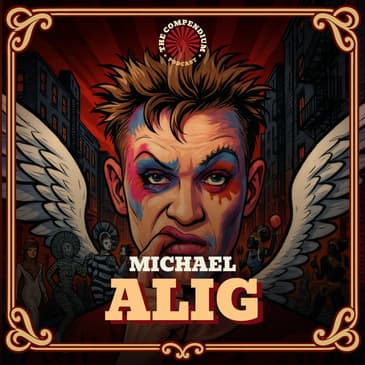
New York’s Club Kids turned nightlife into a neon theatre of reinvention. Michael Alig became its most notorious star, until the murder of Angel Melendez exposed the violence and addiction beneath the spectacle.
There are stories where the setting feels almost as important as the crime, and this is absolutely one of them. We’re heading into the feverish world of late-1980s and early-1990s New York nightlife, when a group of outrageous young performers, promoters and professional attention-seekers known as the Club Kids made the city’s dance floors their personal stage. At the centre was Michael Alig: ambitious, theatrical, endlessly provocative and determined to become famous by any means necessary.
For a while, Alig seemed to have cracked the code. He built parties that blurred the line between nightlife, performance art and pure chaos, turning himself and his friends into celebrities whose only real product was spectacle. But beneath the glitter, drugs and tabloid coverage, the scene became increasingly unstable. When fellow club figure Angel Melendez disappeared in 1996, rumours of a killing spread through the same clubs where Alig had once ruled. The truth, when police finally uncovered it, was even darker than the gossip.
What Happened to Michael Alig and Angel Melendez?
Michael Alig arrived in New York from Indiana in the 1980s and quickly found the city’s nightlife scene. He was fascinated by the way clubs allowed people to invent larger, stranger versions of themselves. At venues including Danceteria and, most famously, the Limelight, he learned how promotion worked: create a moment people could not ignore, fill the room with unforgettable characters, then make sure the press heard about it.
The Club Kids were perfectly suited to that formula. Their elaborate homemade costumes, extravagant make-up and deliberately shocking behaviour made them walking advertisements for the parties they attended. Some became known by names such as James St. James, Amanda Lepore, Walt Paper and Freeze. They appeared on television talk shows, travelled together and staged publicity stunts designed to confuse, amuse or appal anyone watching. For young people who felt excluded elsewhere, the scene could offer freedom, community and the chance to be whoever they wanted for the night.
Alig’s relationship with nightclub owner Peter Gatien helped turn that energy into a business. Gatien’s venues included the Limelight, a former church transformed into one of New York’s most famous clubs. Alig created themed events and employed personalities to attract crowds. His influence grew, but so did the culture of excess around him. Drugs were readily available, and Alig’s ketamine and heroin use became increasingly destructive. Friends later described a man whose need for attention and control had begun to overwhelm everything else.
Angel Melendez was part of this world too. He was known as a drug dealer within the club scene and wore a distinctive pair of feathered wings. On 17 March 1996, Melendez went to the Manhattan apartment shared by Alig and Robert “Freeze” Riggs. Accounts of what followed varied in their details, but both men ultimately admitted their involvement in his death. The confrontation reportedly began over a debt. Riggs struck Melendez with a hammer, and Alig later said he suffocated him.
Instead of contacting the authorities, Alig and Riggs kept the body in the apartment. They eventually dismembered it, placed it in a box and threw it into the Hudson River. The crime was grotesque, but one of the strangest aspects of the case was how openly it circulated as gossip. Alig talked about the killing, sometimes presenting it as a joke or another outrageous performance. James St. James later wrote about the scene and the rumours in Disco Bloodbath.
For months, many people did not know whether to believe Alig. That uncertainty says something disturbing about the world he had created. His entire public identity depended on making reality feel unreal. He had spent years saying shocking things for attention, so even a confession could be dismissed as another act. Meanwhile, Melendez’s brother reported him missing and kept pushing for answers.
In April 1996, a box containing a dismembered torso washed ashore on Staten Island. Investigators could not immediately identify the remains, but the case gradually came together as witnesses spoke and the rumours around Alig hardened into evidence. Police arrested Alig and Riggs in December 1996. Both pleaded guilty to first-degree manslaughter and received prison sentences of 10 to 20 years.
Alig served around 17 years before his release in 2014. He attempted to return to public life, gave interviews and participated in projects trading on his Club Kid notoriety. That created an uncomfortable question about the way true crime and celebrity can overlap: was the public examining a cultural story, or rewarding a killer with the attention he had always wanted? Angel Melendez was not a colourful supporting character in Alig’s legend. He was the victim whose life was taken and whose family had to fight through spectacle to get the truth.
Michael Alig died in New York on Christmas Eve 2020, aged 54. His death was ruled an accidental overdose involving heroin and fentanyl. It was a bleak end to a life shaped by reinvention, addiction and an appetite for fame that never seemed to switch off.
Why This Story Matters
What holds our attention here is the collision between genuine creative freedom and ruthless self-promotion. The Club Kids challenged ideas about gender, beauty, fashion and who was allowed to take up space. Their best moments gave outsiders a community and pushed underground style into mainstream culture. But the freedom of that scene should not be confused with the destructive behaviour that grew around Alig.
The case also shows how spectacle can conceal the obvious. Alig’s persona made everything sound like theatre, even when he was describing a real killing. Friends, journalists and club regulars heard versions of the truth before the police made an arrest, yet the story remained suspended between rumour and performance. When a person builds a career on being unbelievable, disbelief can become a kind of shield.
We also have to separate Alig’s fame from Melendez’s humanity. Popular retellings often frame the case as the downfall of a notorious party promoter, but that perspective risks turning the victim into a plot device. Melendez had a family, a life and a place in the community beyond the drug debts that dominated coverage of his death. Keeping him at the centre changes the meaning of the story.
Finally, this is a cautionary tale about the media’s attraction to transgression. The murder inspired books, documentaries and the 2003 film Party Monster. Those works preserve an extraordinary chapter of New York history, but they also keep feeding the celebrity machine Alig understood so well. We’re left asking whether it is possible to explore the culture honestly without repeating its habit of rewarding the loudest and most shocking person in the room.
Topics Include
Michael Alig’s rise through New York nightlife and the Club Kids scene
The Limelight, Peter Gatien and the business behind the spectacle
The murder of Angel Melendez and the rumours that hid in plain sight
How drugs, celebrity and performance blurred the truth
Alig’s conviction, release and death from an accidental overdose
Resources and Further Reading
Disco Bloodbath - by James St. James
Party Monster (2003) - by Fenton Bailey & Randy Barbato
Michael Alig - Wipipedia
Party Monsters The Shockumentry - by Fenton Bailey
Michael Alig and the Limelight Murder - by The Village Voice